Bronchology · Special Prosthesis

Stening® Subglottic Artemic SGA

Subglottic stent of radiopaque biocompatible silicone, with a widened, oval upper end that mimics the glottic lumen and four anchors to improve its fixation in the subglottis. Available in two models: SGA11 (small) and SGA12 (large).

Product code: SGA
Radiopaque silicone subglottic stent Stening® Subglottic Artemic SGA
Subglottic Artemic SGA silicone stent Stening®
Artemic subglottic prosthesis with oval end
Subglottic Artemic stent, view of anchors
Subglottic Artemic stent, detail
Bronchology · Special Prostheses

Stening® Subglottic Artemic SGA

Code SGA

The Stening® Subglottic Artemic SGA —also known as the Artemic subglottic stent— is a subglottic-type stent with a widened, oval-shaped upper end. It also has a slight downward forward inclination, intended to mimic the glottic lumen.

The middle body is cylindrical and has four anchors, two of them opposite to the others to improve its fixation in the subglottis. Its final portion widens again to prevent or reduce the possibility of cephalic migration. The Subglottic Artemic stent is radiopaque.

Material
Radiopaque biocompatible silicone
Line
Bronchology
Presentations
2 models (SGA11 and SGA12)
Technical specifications

Product information

Review the indications, dimensions of both models, how to use, care and warnings of the Stening® Subglottic Artemic SGA.

Clinical indications

Its usefulness in laryngotracheal conditions, as well as its precise indications, will be determined by the specialized physician. In general, it shares those of the Subglottic stent:

  • Subglottic stenosis.
  • Laryngotracheal stenosis.
  • High tracheal stenosis.
  • Conditions that reduce the laryngeal and/or tracheal lumen.

Available dimensions

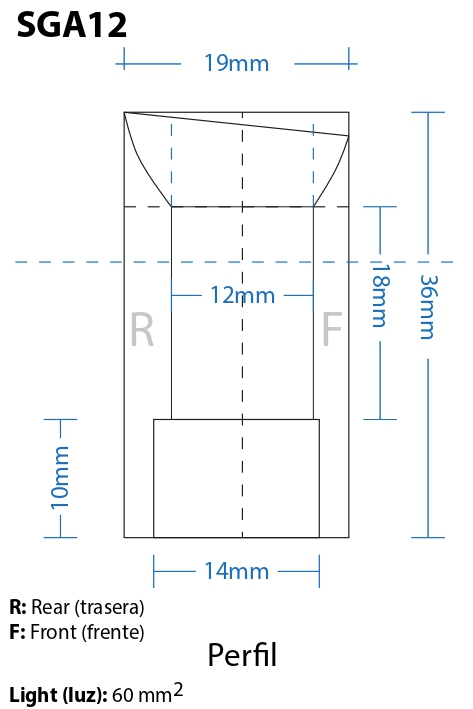
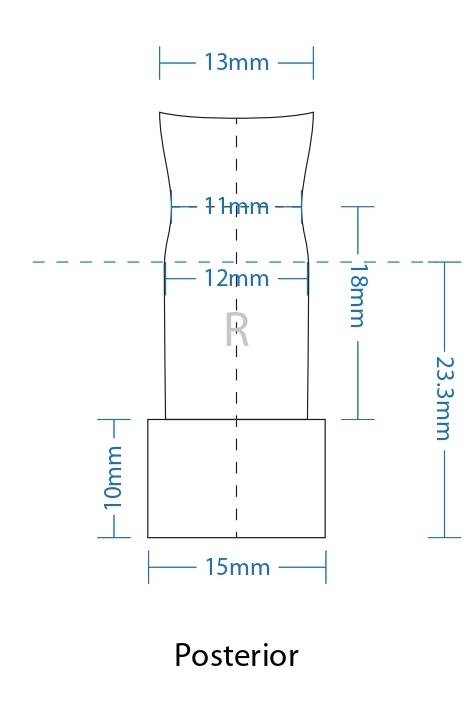
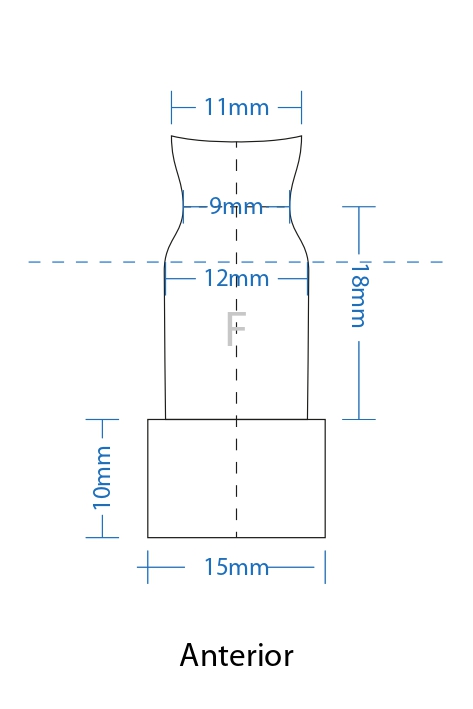
The Stening® Subglottic Artemic SGA is available in two models. The small model (SGA11) has a minimum cross-sectional area for airflow of 40.6 mm²; in the large model (SGA12) that area widens to 60 mm². Select a model to view its dimensional plans.

Dimensional plan of the Stening® Subglottic Artemic SGA11, profile view Dimensional plan of the Stening® Subglottic Artemic SGA11, rear view Dimensional plan of the Stening® Subglottic Artemic SGA11, front view
Dimensional plan of the Stening® Subglottic Artemic SGA12, profile view Dimensional plan of the Stening® Subglottic Artemic SGA12, rear view Dimensional plan of the Stening® Subglottic Artemic SGA12, front view

Dimensional plans in millimeters. Click each plan to enlarge it. For specific inquiries about sizes or instruments, contact us at (+54) 11 4553-5070 or (+54) 11 4551-2333.

Insertion technique

The length and diameter of the stenosis must be properly determined in order to select a stent of appropriate size: small or large. The small size, SGA11, has a minimum cross-sectional area for airflow of 40.6 mm²; this area widens to 60 mm² in the large model, code SGA12.

The procedure is performed under general anesthesia. The basic introduction maneuvers are the same as those used for the rest of the straight intratracheal stents, with some variations detailed below.

A prior endosurgical treatment of the affected area is necessary, in order to increase and adapt the diameter of the airway so the stent can be lodged.

For its implantation a tracheoscope or a prosthesis introducer may be used, inside which the stent is placed so that its widest, oval end is in the proximal position, since it will occupy the subglottic area, immediately below the vocal cords. The opposite end of the stent will be the distal one, since its final destination is the first tracheal portion.

Positioning

When introducing the stent into the tracheoscope or prosthesis loader, make sure that the plane of the stent marked “A” is “anterior”. Because the implant is subglottic, the end of the tracheoscope must not cross the vocal cords excessively, but rather remain insinuated between the two open cords.

From this position, push the stent with the prosthesis ejector rod until the stent leaves the tracheoscope through its distal end and lodges in the subglottis. The stent must not be pushed against the vocal cords. Position-adjustment maneuvers may be required and performed with an alligator forceps.

It is preferable that the final distance between the vocal cords and the stent be equal to or greater than 2 mm. Keep in mind that distances in the airway are difficult to estimate, since the length of the organ may vary between the standing and lying positions. The recovery of muscle tone after anesthesia adds an additional difficulty in determining anatomical distances. Transient changes in tracheal length may also occur, due to prior dilation maneuvers performed with rigid instruments on the organ.

Some or all of these circumstances may be present in laryngotracheal lumen reconstruction and implantation procedures, and the precautions that their nature requires must be taken. What is proposed here proceeds from what is known at the time of this revision and does not invalidate or contradict other implantation and removal modalities that, by their usefulness or experience, each operator deems preferable.

Removal technique

The Subglottic Artemic stent can be removed with an alligator-type forceps and with the aid of a tracheoscope or a laryngoscope.

Post-implant care

Recommendations for the follow-up of the patient with a subglottic stent.

  • Nebulizations and periodic check-ups according to medical criteria.
  • Monitoring of phonation, swallowing, possible microaspiration and of the correct location of the stent.
  • The convenient permanence time required in each case will be determined by the specialist physician or acting team.

Warnings of use

Important

Respect the anterior position (mark: “A” on the stent wall) when introducing it into the tracheoscope for application.

The lowest side of the stent is always “anterior” and the highest “posterior”, thus corresponding to normal laryngeal anatomy.

Keep secretions moist when present, by performing frequent nebulizations with warm isotonic saline solution.

Oro- or nasotracheal intubation for mechanical ventilation or general surgery will be limited, conditioned or impeded by the presence of the stent in the larynx. The safest method for ventilation must be established with the consensus of the specialists involved.

Also known as: SGA stent · Artemic subglottic stent · Artemic subglottic prosthesis · laryngotracheal stent

Need more information
about this device?

Contact us for personalized technical advice, size selection, custom manufacturing or inquiries about international shipping.

Chat on WhatsApp