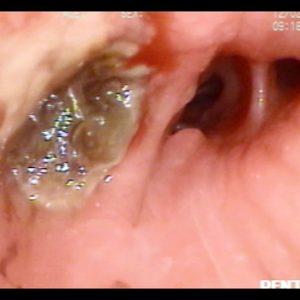
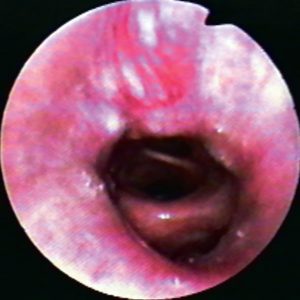
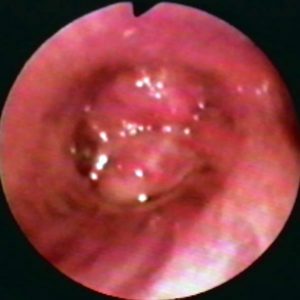
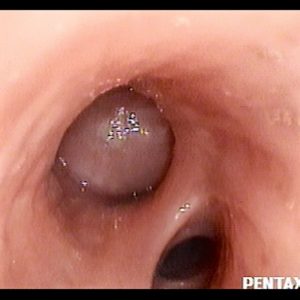
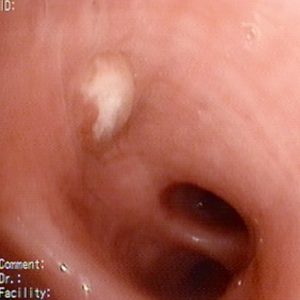
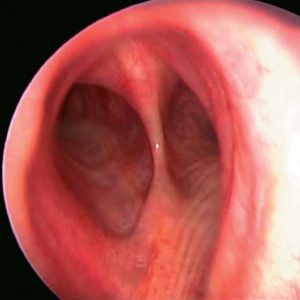
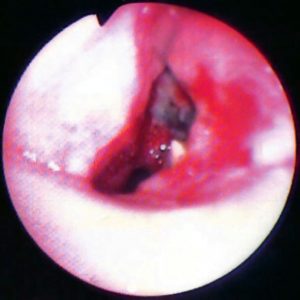
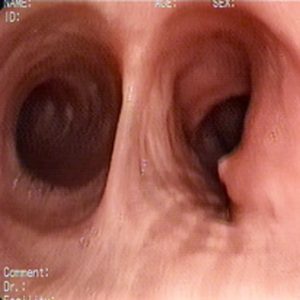
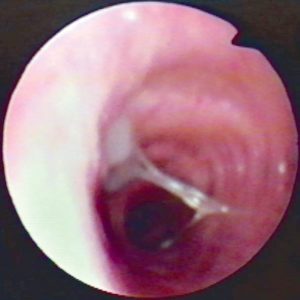
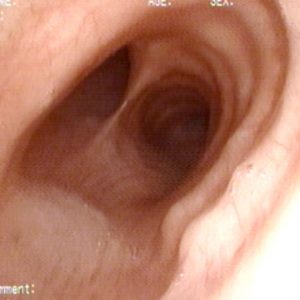
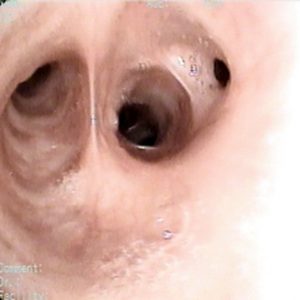
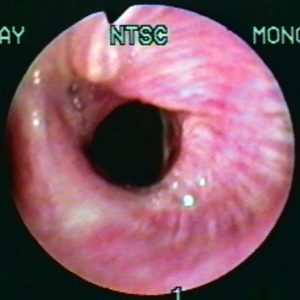
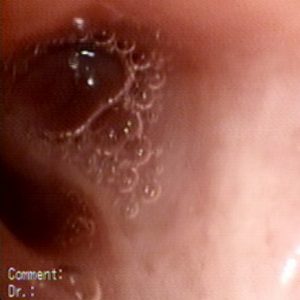
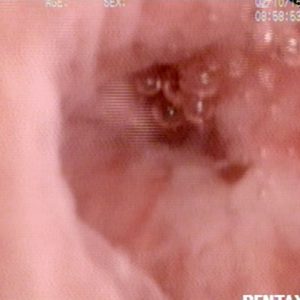
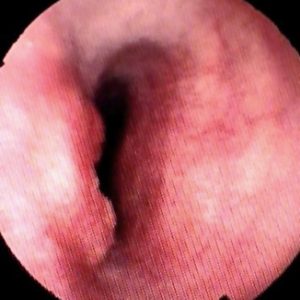
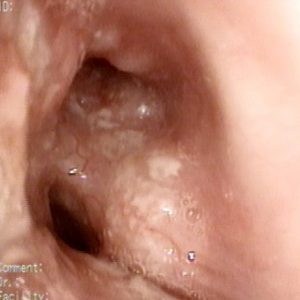
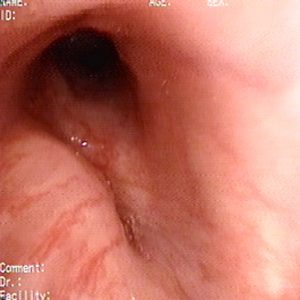
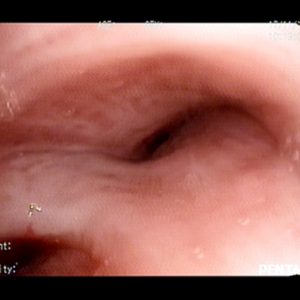
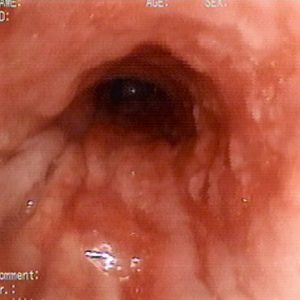
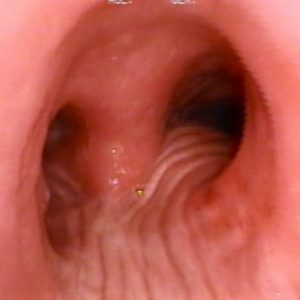
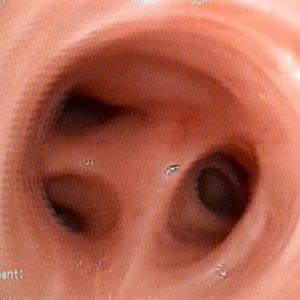
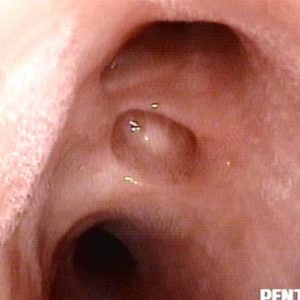
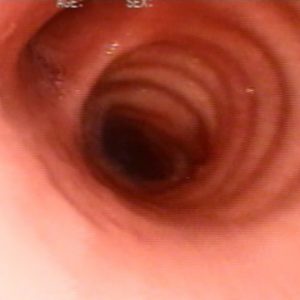
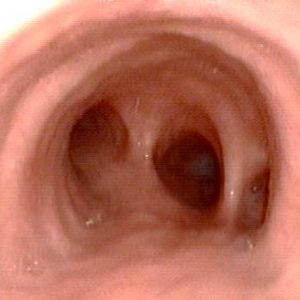
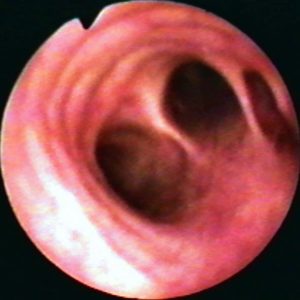
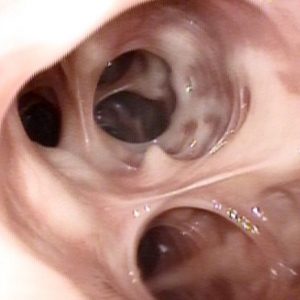
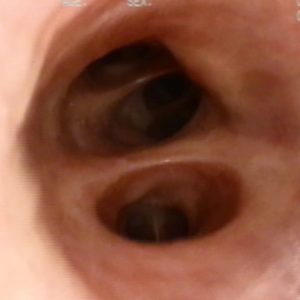
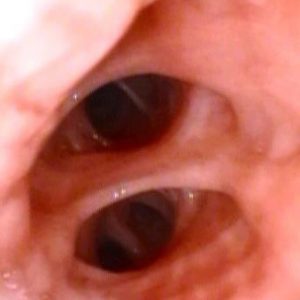
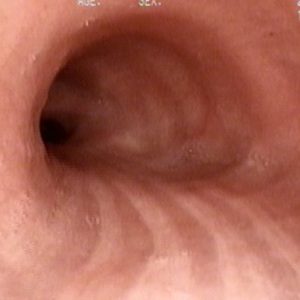
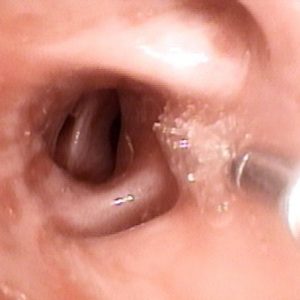
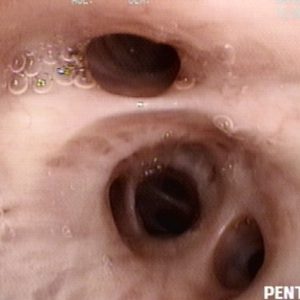
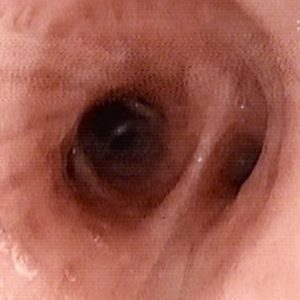
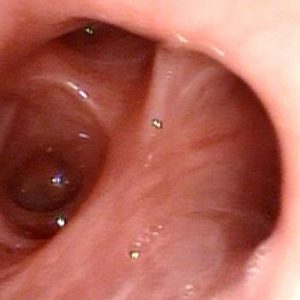
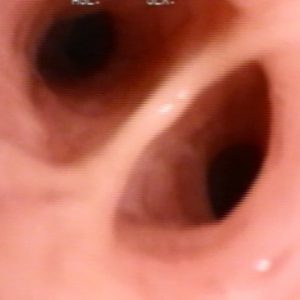
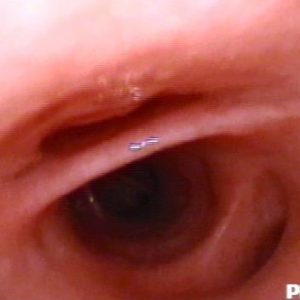
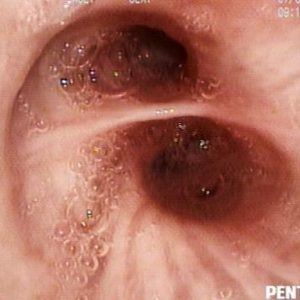
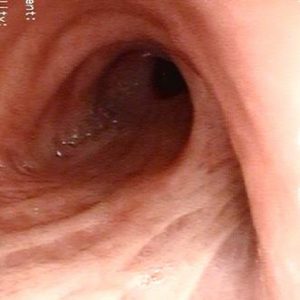
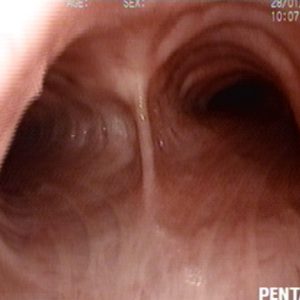
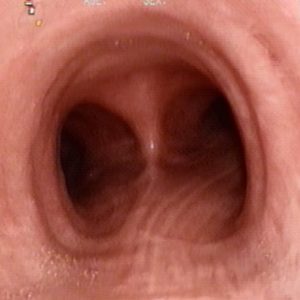
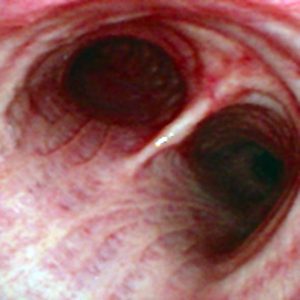
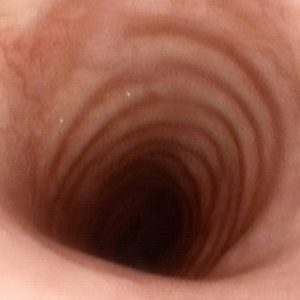
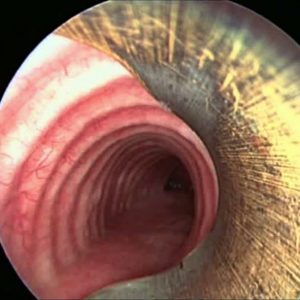
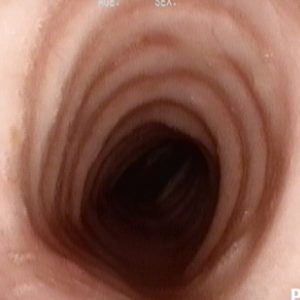
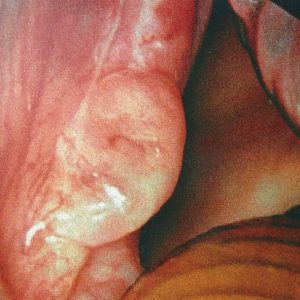
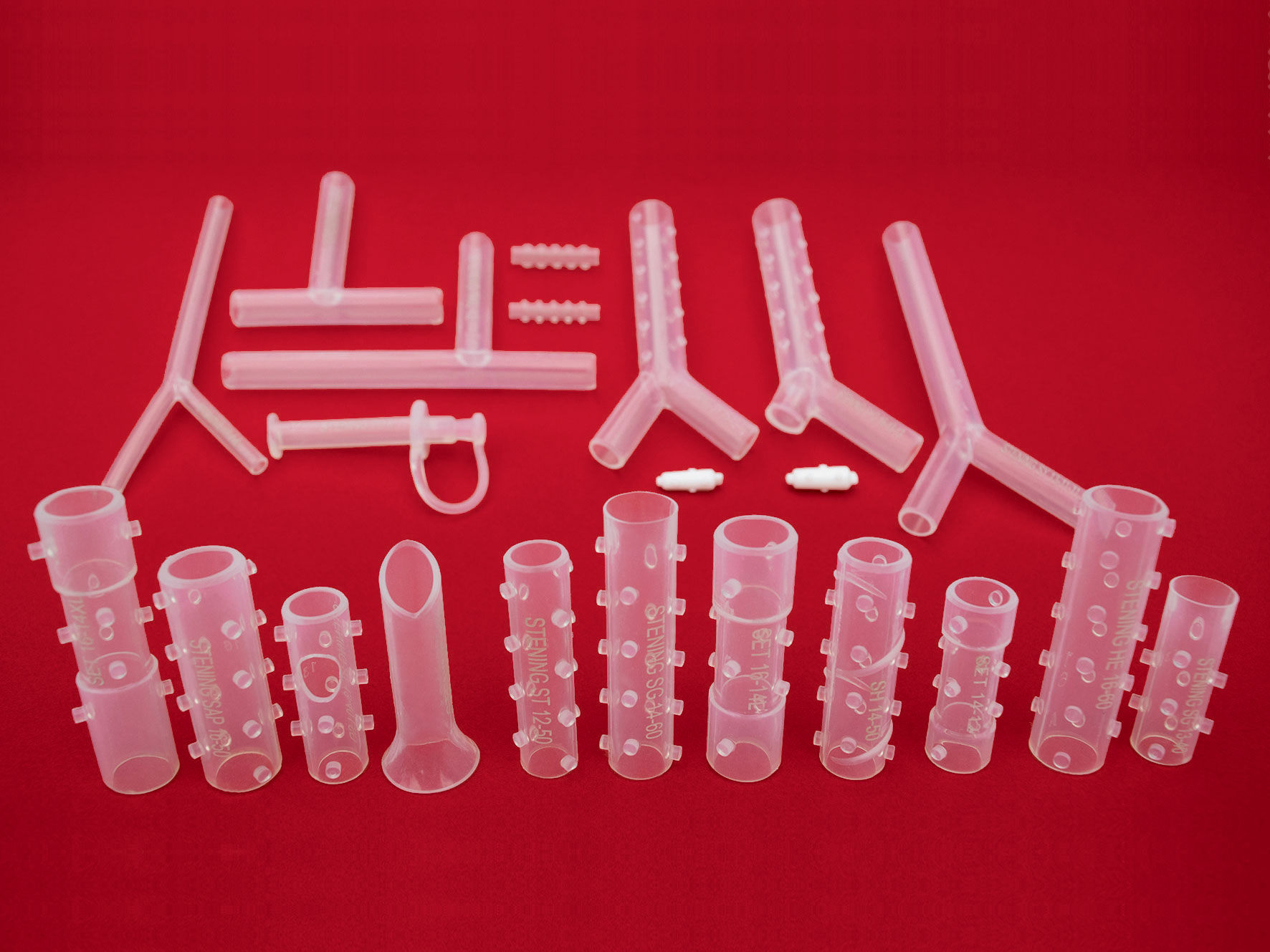
Publications, articles and clinical cases on the use of Stening® devices, organized by area of application.
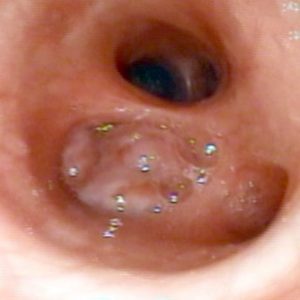
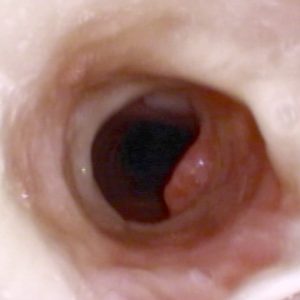
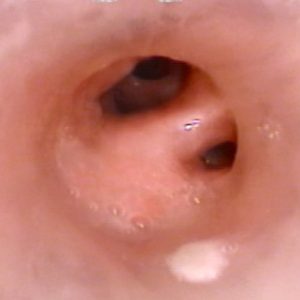
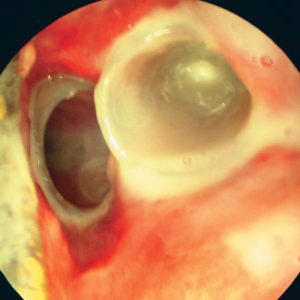
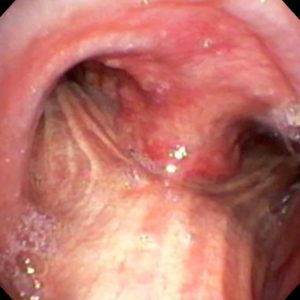
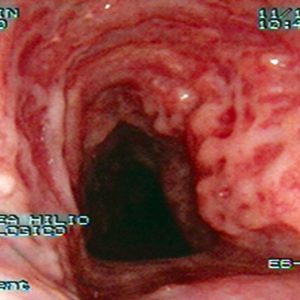
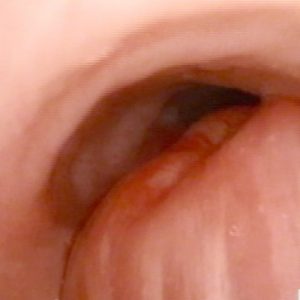
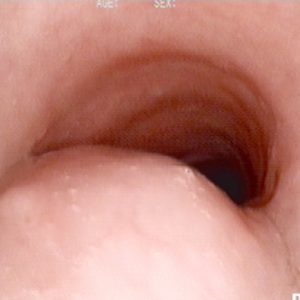
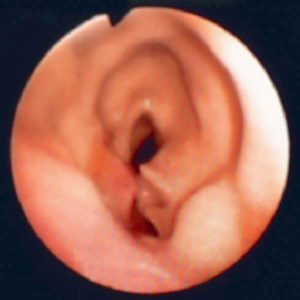
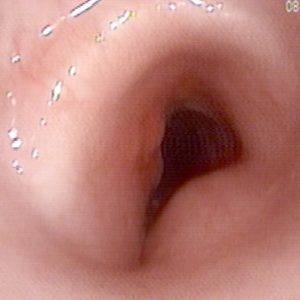
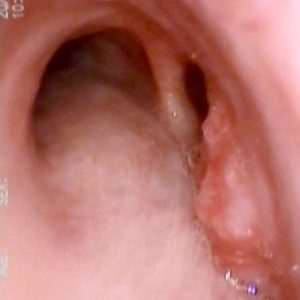
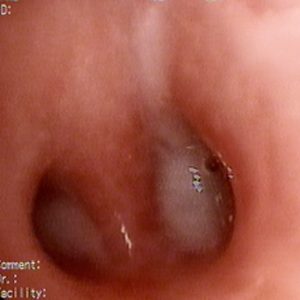
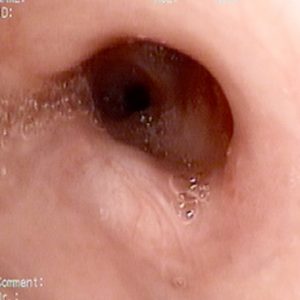
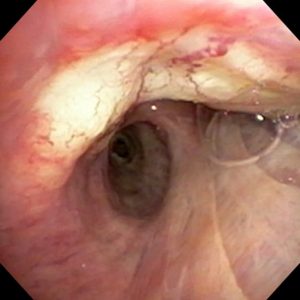
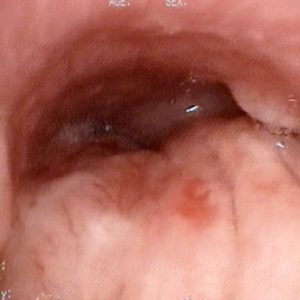
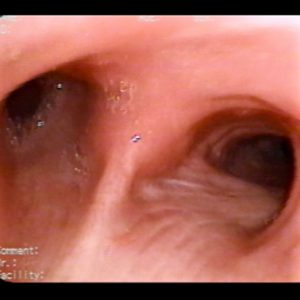
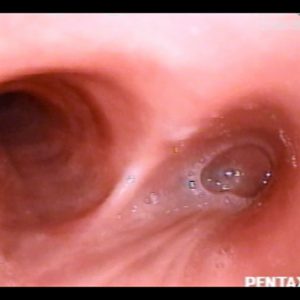
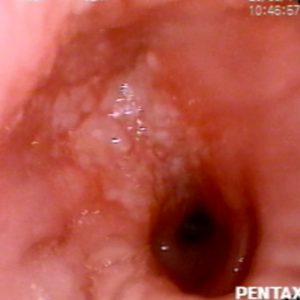
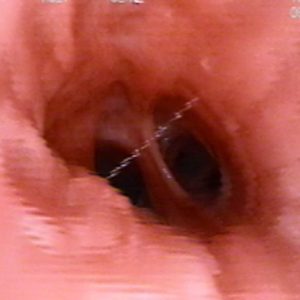
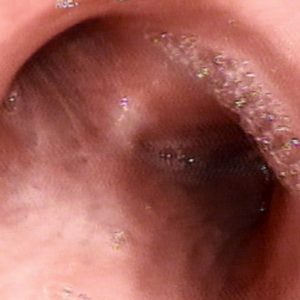
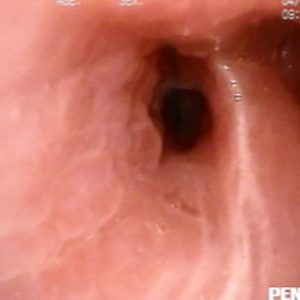
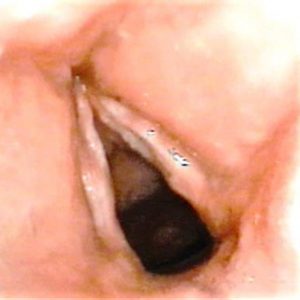
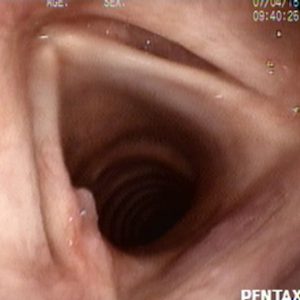
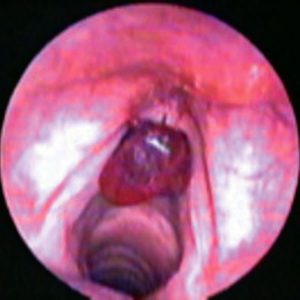
Acquired tracheoesophageal fistula (TEF) that can occur for multiple reasons. The most common non-neoplastic etiology is the one related to complications of orotracheal intubation and tracheostomy.
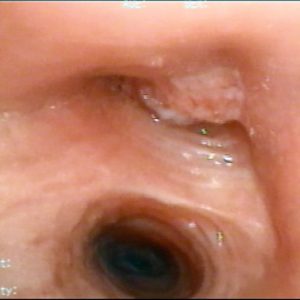
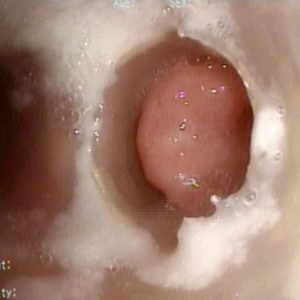
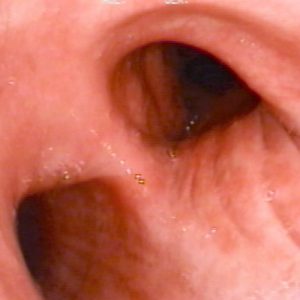
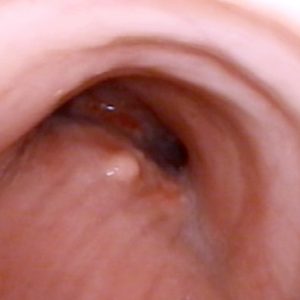
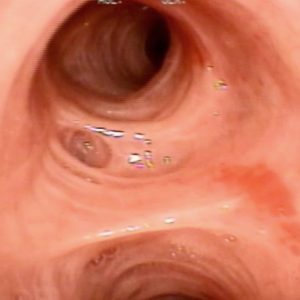
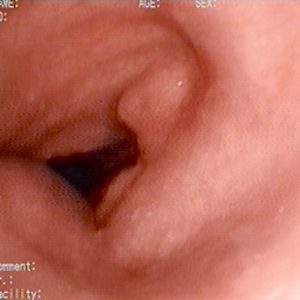
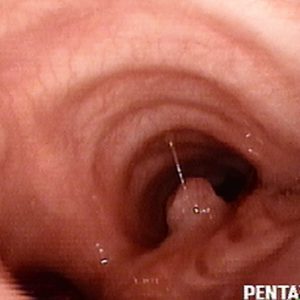
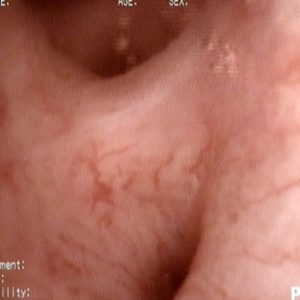
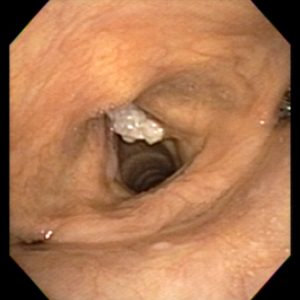
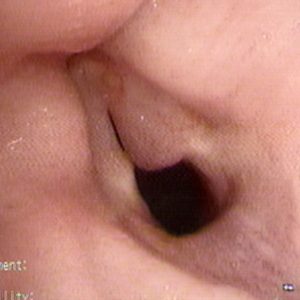
Two new endoscopic signs are described that may be useful to improve the diagnostic yield of bronchoscopy.
Technical Report No. 48 on the effectiveness, safety and economic advantages of using bronchial and tracheal stents for the management of lung cancer. On page 9, the document explicitly mentions Stening® brand prostheses for use in multiple situations.
Original article published in the Revista Americana de Medicina Respiratoria (American Journal of Respiratory Medicine) mentioning the use of Stening SRL prostheses.

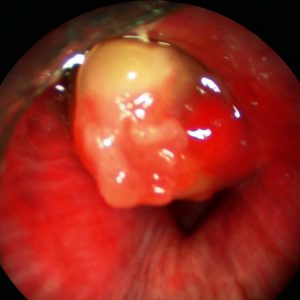
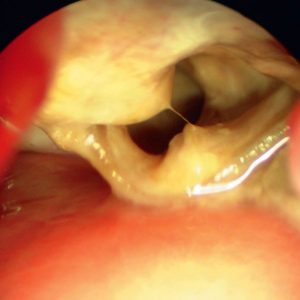
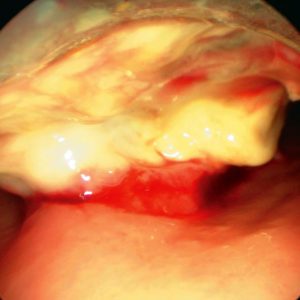
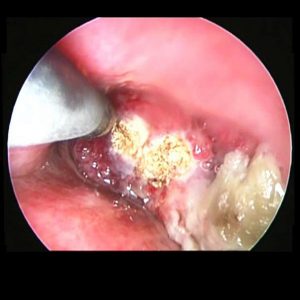
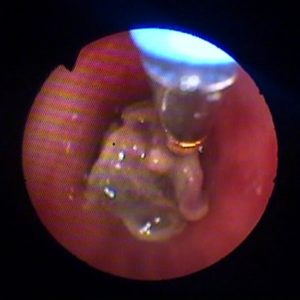
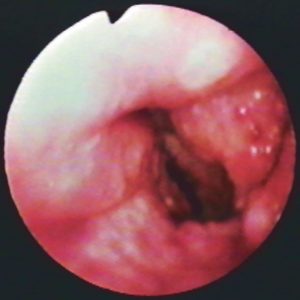
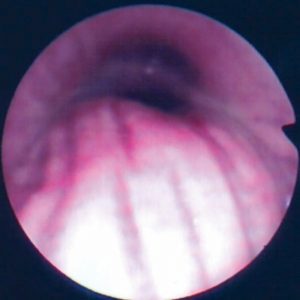
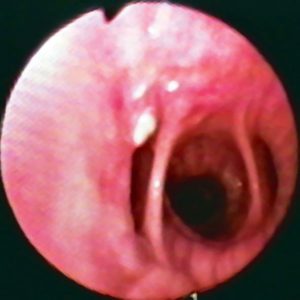
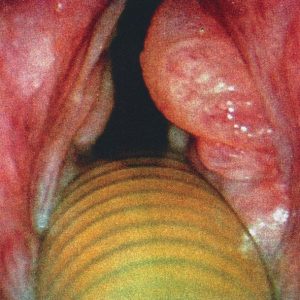
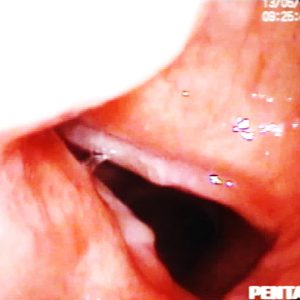
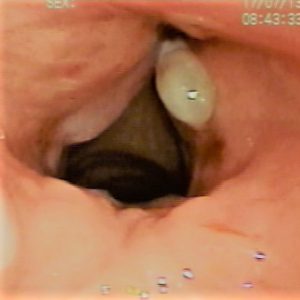
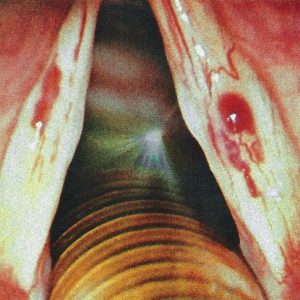
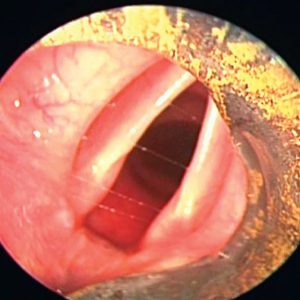
Laryngo-tracheobronchoscopy with placement of a laryngeal prosthesis in a canine patient (Labrador). Report by Vet. María Cecilia Ricart.
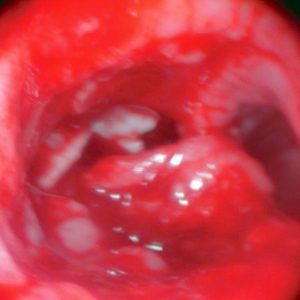
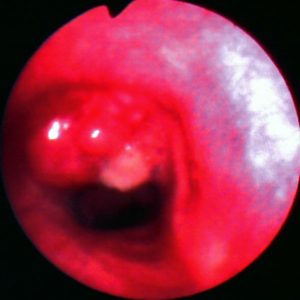
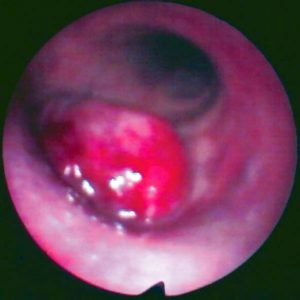
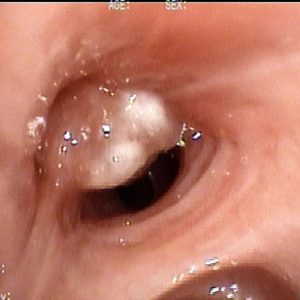
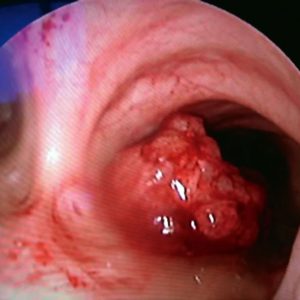
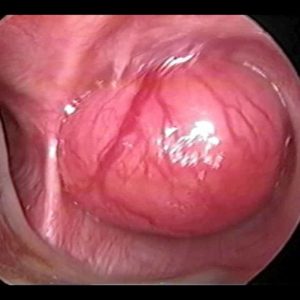
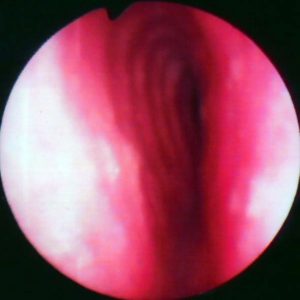
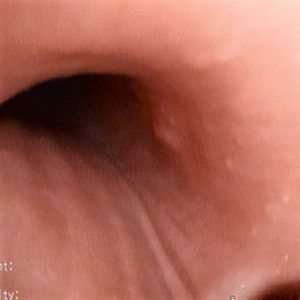
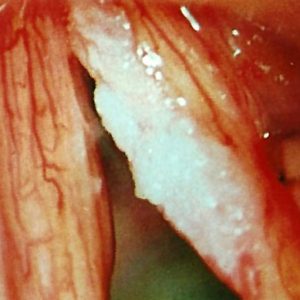
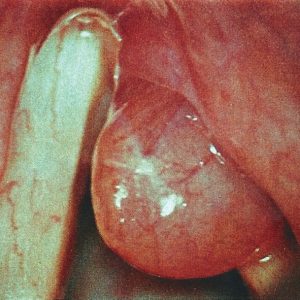
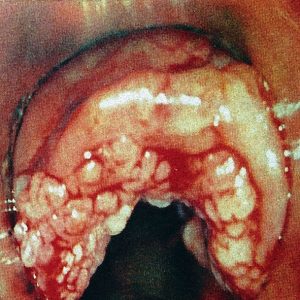
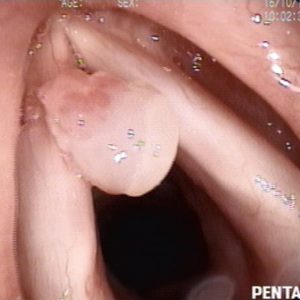
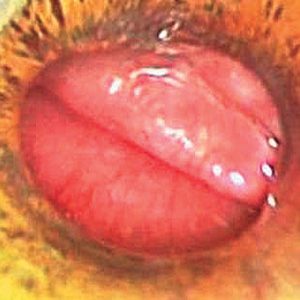
Smooth-surfaced, vascularized tumor in the nasopharyngeal region in a 20 kg mixed-breed dog. Courtesy of Dr. Cesar Rojas.
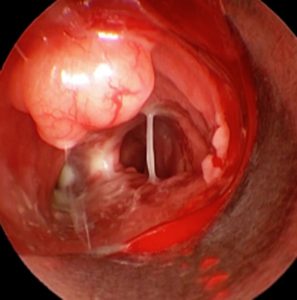
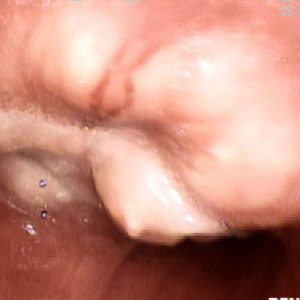
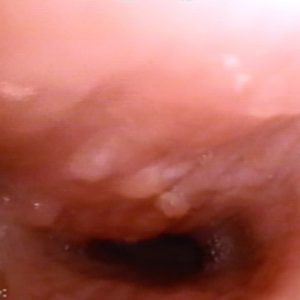
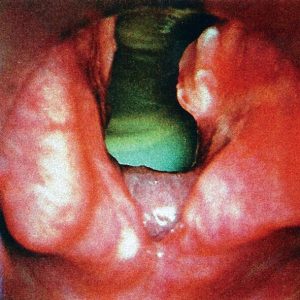
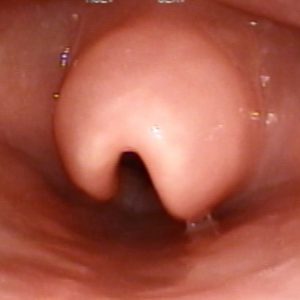
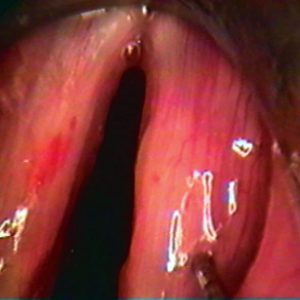
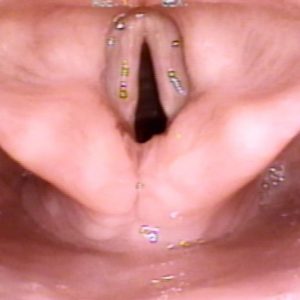
Therapeutic alternative with the placement of a closed silicone laryngeal prosthesis (stent) in a dog with laryngeal paralysis.
Author: Ricardo Isidoro · Hospital Enrique Tornú. Buenos Aires, Argentina
Validation of the reliability of an alternative decontamination method for tracheobronchial stents using an orthophthalaldehyde (OPA) solution as the active agent.
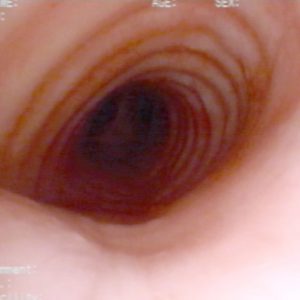
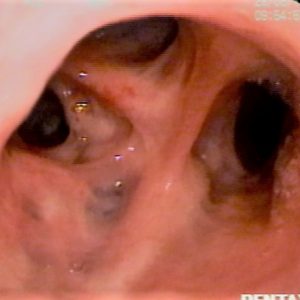
Tracheobronchial stents are devices used to open collapsed airways. A stenosis or narrowing of the lumen can be caused by many factors: lung cancer, metastatic cancers, infections, lymphomas, tuberculosis, abnormal granulation tissue, etc.
Rigid bronchoscopy is a procedure used to gain access to the patient's airway and thus allow the passage of larger instruments and cameras to diagnose and treat conditions of that area.
Author: Agustín Bignú · Physicist – Machine Learning Engineer.
In this paper, a classification of three classes of medical devices manufactured by Stening® was carried out using three machine learning algorithms: Support Vector Machine, Logistic Regression and Decision Tree.
Author: Agustín Bignú · Physicist – Machine Learning Engineer.
This is the first paper of a more ambitious Stening® project. A neural network was trained to distinguish six different classes of devices. The results are very encouraging and show the potential of this technology in the future of medicine.
Author: Isidoro Ricardo · Head of the Bronchoscopy Service. Hospital Enrique Tornú. Buenos Aires. Argentina
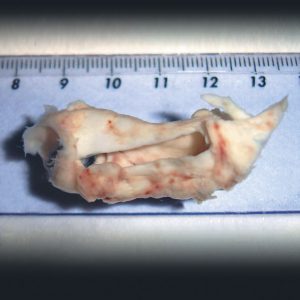
The prosthesis removed from a patient with benign tracheal stenosis, after 10 years of implantation, was analyzed in comparison with a new device. Laboratory aging simulation tests were performed and the causes of therapeutic failures are analyzed.
Author: Isidoro Ricardo · Head of the Bronchoscopy Service. Hospital Enrique Tornú. Buenos Aires. Argentina
This is a 29-year-old male patient. He was hospitalized for severe traumatic brain injury and underwent orotracheal intubation for mechanical ventilation. On day 8, a tracheostomy was performed and he continued on mechanical ventilation for a total of 21 days. He remained with a nasogastric tube for three weeks.
Author: Isidoro Ricardo · Head of the Bronchoscopy Service. Hospital Enrique Tornú. Buenos Aires. Argentina
Two new endoscopic signs are described that may be useful to improve the diagnostic yield of bronchoscopy. A semiological essay on particular anatomical and functional circumstances that reveal the existence of a nearby condition, but beyond the bronchoscopist's range of observation.
Author: Ricardo Isidoro, Marcelo C. Debais · Hospital Enrique Tornú, City of Buenos Aires, Argentina
A 20-year-old male was treated in the intensive care unit due to polytrauma resulting from a traffic accident. He received mechanical ventilation for 11 days through an orotracheal tube. Three weeks later he presented obstructive respiratory distress and underwent tracheostomy.
Author: Ricardo Isidoro · Head of the Bronchoscopy Service. Hospital Enrique Tornú. Buenos Aires. Argentina.
Tracheobronchial disobstruction is a method to make the airway patent and offer a better quality of life to the patient. Starting in 1997, the bronchoscopy service of Hospital Enrique Tornú performed the first endosurgical treatments to reconstruct the tracheal and bronchial lumen, using stents.
Author: Ricardo Isidoro · Head of the Bronchoscopy Service. Hospital Enrique Tornú. Buenos Aires. Argentina.
Tracheobronchial prostheses are used to treat obstruction of the large airway in benign conditions and to palliate the effects of obstruction caused by neoplastic lung disease.
Author: Ricardo Isidoro · Head of the Bronchoscopy Service. Hospital Enrique Tornú. Buenos Aires. Argentina.
The endoscopic treatment of lesions that produce occlusion or subocclusion of different magnitude in the trachea, main or some lobar bronchi has achieved sufficient diffusion within the international medical community, to the point that its performance is well established.
Author: Ricardo Isidoro · Endoscopy Section, Pulmonology Division, Hospital Dr. E. Tornú – Buenos Aires
Presentation of airway recanalization in 300 patients in the Respiratory Endoscopy section of Hospital Tornú: 115 women (38.33%) and 185 men (61.66%) aged between 14 and 86 years. Mean age 52 ± 16.26.
A gallery of airway endoscopic semiology: real bronchoscopic images with their clinical commentary, grouped by category. Click any case to view it in detail.
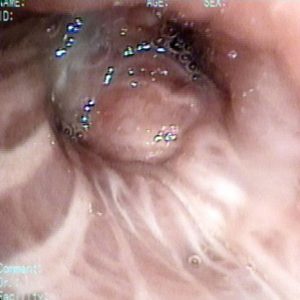
#294The tracheal lipoma usually appears as a smooth tumor that rises gently on the wall, with visible vessels on the surface. In this case he has suffered a sarcomatous degeneration . Liposarcoma. Francisco Muñiz Hospital
The tracheal lipoma usually appears as a smooth tumor that rises gently on the wall, with visible vessels on the surface.
In this case he has suffered a sarcomatous degeneration.
Liposarcoma.
Francisco Muñiz Hospital
#293Leiomyosarcoma : This image is not very precise, but there is a red wine formation that occupies all the light of the middle lobe bronchus. The bubble crown indicates that the lesion does not infiltrate the entire perimeter of the wall, or that there is a pedicle, and that ventilation is still possible. Leiomyosarcoma in a bronchial neoplasm with low frequency of presentation.
Leiomyosarcoma: This image is not very precise, but there is a red wine formation that occupies all the light of the middle lobe bronchus.
The bubble crown indicates that the lesion does not infiltrate the entire perimeter of the wall, or that there is a pedicle, and that ventilation is still possible.
Leiomyosarcoma in a bronchial neoplasm with low frequency of presentation.
#292Warty appearance formation on the bronchial wall about to be captured by the biopsy forceps: Papilloma .
Warty appearance formation on the bronchial wall about to be captured by the biopsy forceps: Papilloma.
#291Not identifiable: contiguous to the spur, the tissue that has proliferated to occlude the light appears friable, vegetative and with a bulge in its irregular surface. All due to an unrecognizable injury to the endoscopist. Hamartoma confirmed. Italian Hospital of the city of Buenos Aires
Not identifiable: contiguous to the spur, the tissue that has proliferated to occlude the light appears friable, vegetative and with a bulge in its irregular surface.
All due to an unrecognizable injury to the endoscopist.
Hamartoma confirmed.
Italian Hospital of the city of Buenos Aires
#290Although the usual morphology is usually «in cluster», this unique and sessile papilloma , identical in color to the mucosa, seems to be monitored from the trachea at the entrance to the main bronchi.
Although the usual morphology is usually «in cluster», this unique and sessile papilloma, identical in color to the mucosa, seems to be monitored from the trachea at the entrance to the main bronchi.
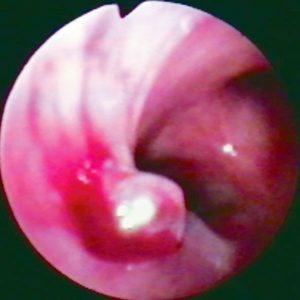
#289As a solitary hump this tumor emerges from the tracheal wall as if it were a uvula. Chondrosarcoma confirmed (Francisco Muñiz Hospital).
As a solitary hump this tumor emerges from the tracheal wall as if it were a uvula.
Chondrosarcoma confirmed (Francisco Muñiz Hospital).
#288With the help of a deflector, the clamp inserted inside has formed a 90 degrees angle and is ready to perform a transbronchial biopsy (BTB) in an upper lobe.
With the help of a deflector, the clamp inserted inside has formed a 90 degrees angle and is ready to perform a transbronchial biopsy (BTB) in an upper lobe.
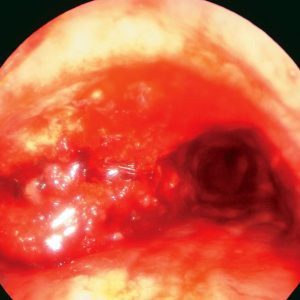
#287Confusing image in which the anatomical structures are difficult to recognize. The tracheal domed ceiling ends in the anterior carinal triangle, barely visible. On your right the source bronchus. Large amount of blood and exudates fill the free space between the disordered tissues that occupy the light, occluding the left source bronchus. A carcinoma of the esophagus has destroyed the posterior wall of the main bronchus, as it always does in this location given its vicinity, and a set of esophageal mucosa, and neoplastic tissue now occupies the airway.
Confusing image in which the anatomical structures are difficult to recognize.
The tracheal domed ceiling ends in the anterior carinal triangle, barely visible.
On your right the source bronchus.
Large amount of blood and exudates fill the free space between the disordered tissues that occupy the light, occluding the left source bronchus.
A carcinoma of the esophagus has destroyed the posterior wall of the main bronchus, as it always does in this location given its vicinity, and a set of esophageal mucosa, and neoplastic tissue
now occupies the airway.
#286Flexible bronchoscopy performed to determine the possibility of operation of an esophageal carcinoma . The longitudinal folds have completely disappeared due to the edema of the posterior wall. A small bulge rises on the surface as a direct sign of infiltration by neoplastic tissue of the tracheal wall.
Flexible bronchoscopy performed to determine the possibility of operation of an esophageal carcinoma.
The longitudinal folds have completely disappeared due to the edema of the posterior wall.
A small bulge rises on the surface as a direct sign of infiltration by neoplastic tissue of the tracheal wall.
#285The bulging of the posterior wall «separates the longitudinal folds», and is a necessary effect of the posterior extrinsic compressions . In the case, a carcinoma of the esophagus exerts a notorious repercussion that, due to its contiguity, it produces on the trachea all the way to the carina, which is also affected.
The bulging of the posterior wall «separates the longitudinal folds», and is a necessary effect of the posterior extrinsic compressions.
In the case, a carcinoma of the esophagus exerts a notorious repercussion that, due to its contiguity, it produces on the trachea all the way to the carina, which is also affected.
#284Pulmonary histoplasmosis with bronchial involvement: a voluminous formation occupies the right source bronchus . The carinal edge can be seen at hour 9 of the image. The lesion presents with irregular surface, very vascularized areas and partially covered by retained secretions. The diagnosis was established based on the isolation of the causative agent from the endoscopic biopsies.
#283Exophytic lesion that sits on both carinal slopes. The surface is partially impacted and due to its large size it considerably reduces the light of both source bronchi. Changes of coloration in the mucosa with very congested areas and general aspect that makes it similar to a bronchial carcinoma.
Exophytic lesion that sits on both carinal slopes. The surface is partially impacted and due to its large size it considerably reduces the light of both source bronchi.
Changes of coloration in the mucosa with very congested areas and general aspect that makes it similar to a bronchial carcinoma.
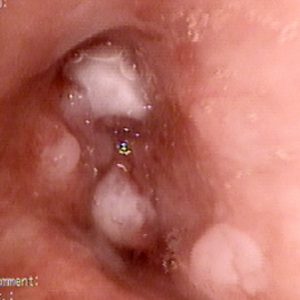
#282Non-Hodgkin lymphoma : The light of the intermediate bronchus is reduced by a multilobal formation, with a whitish, probably necrotic area. The mucosa presents irregular changes and diffuse inflammatory.
Non-Hodgkin lymphoma: The light of the intermediate bronchus is reduced by a multilobal formation, with a whitish, probably necrotic area.
The mucosa presents irregular changes and diffuse inflammatory.
#281Endobronchial metastasis : A vegetating formation with a fairly smooth surface and with very inflamed areas, completely occludes the light from the left source bronchus at its entrance: clear cell carcinoma .
Endobronchial metastasis: A vegetating formation with a fairly smooth surface and with very inflamed areas, completely occludes the light from the left source bronchus at its entrance: clear cell carcinoma.
#280Clear cell carcinoma . A voluminous mass of tissue occupies the light of the right source bronchus , with some protrusions on the surface. Through a triangular light that allows pulmonary ventilation, you can see the entrance of the upper lobe. A plane of separation with the mucosa of the bronchus around the perimeter of the lesion indicates that it has a base of distal implantation.
Clear cell carcinoma.
A voluminous mass of tissue occupies the light of the right source bronchus, with some protrusions on the surface.
Through a triangular light that allows pulmonary ventilation, you can see the entrance of the upper lobe.
A plane of separation with the mucosa of the bronchus around the perimeter of the lesion indicates that it has a base of distal implantation.
#279Bronchoscope stopped next to a smooth surface formation but irregular contour, with abnormally voluminous surface vessels. It is an endotracheal metastasis of breast carcinoma . At the bottom of the image, the edema, the enlarged and pale carina, the left main bronchus with its reduced entrance and clogged secretions complete the set of indicative elements of extended disease. Italian Hospital of the city of Buenos Aires
Bronchoscope stopped next to a smooth surface formation but irregular contour, with abnormally voluminous surface vessels.
It is an endotracheal metastasis of breast carcinoma.
At the bottom of the image, the edema, the enlarged and pale carina, the left main bronchus with its reduced entrance and clogged secretions complete the set of indicative elements of extended disease.
Italian Hospital of the city of Buenos Aires
#278A formation occludes the entrance of the lower right lobe and in its growth displaces the spur of the middle lobe. A fairly common presentation of endobronchial metastases of renal carcinoma Alejandro Posadas Hospital.
A formation occludes the entrance of the lower right lobe and in its growth displaces the spur of the middle lobe.
A fairly common presentation of endobronchial metastases of renal carcinoma
Alejandro Posadas Hospital.
#277This bright, congested and pale tumor , obliterates the entrance of the bronchus culminate in the left upper lobe, allowing only the passage of air to the lingula.
This bright, congested and pale tumor, obliterates the entrance of the bronchus culminate in the left upper lobe, allowing only the passage of air to the lingula.
#276Combination. In the upper part of the image we can see the lesion that is still submucosally located, in the form of a protrusion that seeks to burst into the light, with its plethoric parallel vessels. In the center of the photograph the lesion is vegetative and thrives inside the bronchial lumen. Carcinoma .
Combination. In the upper part of the image we can see the lesion that is still submucosally located, in the form of a protrusion that seeks to burst into the light, with its plethoric parallel vessels. In the center of the photograph the lesion is vegetative and thrives inside the bronchial lumen. Carcinoma.
#275Image corresponding to the previous case, after a recanalization of the right source bronchus. There are diffuse inflammatory changes and blood in the path of the bronchus, which can be followed up to the lower lobe. The folds in the source bronchus, deep and tortuous, are diverted to enter the upper lobe, but it is occluded. Neoplastic tissue persists in the medial wall of the main bronchus and the tracheal carina is unrecognizable.
Image corresponding to the previous case, after a recanalization of the right source bronchus.
There are diffuse inflammatory changes and blood in the path of the bronchus, which can be followed up to the lower lobe.
The folds in the source bronchus, deep and tortuous, are diverted to enter the upper lobe, but it is occluded.
Neoplastic tissue persists in the medial wall of the main bronchus and the tracheal carina is unrecognizable.
#274A voluminous vegetative formation settles in the tracheal carina and completely occludes the light of the right source bronchus and reduces that of the left. The surface is irregular, with protrusions and increased vascularization in some areas. The tissue that obstructs the right main bronchus has been necrotic. The posterior tracheal wall seems to be thrown forward and the edema has erased the folds. Giant cell carcinoma.
A voluminous vegetative formation settles in the tracheal carina and completely occludes the light of the right source bronchus and reduces that of the left.
The surface is irregular, with protrusions and increased vascularization in some areas. The tissue that obstructs the right main bronchus has been necrotic.
The posterior tracheal wall seems to be thrown forward and the edema has erased the folds.
Giant cell carcinoma.
#273A vegetative formation sits on the right side of the carina. It presents multiple mamelons that give it an irregular and hyperemic aspect that contrasts with the general pallor of the healthy mucosa. An ecchymotic dot is distributed in the area of the edge of the main carina and in its posterior triangle. Squamous cell carcinoma.
A vegetative formation sits on the right side of the carina.
It presents multiple mamelons that give it an irregular and hyperemic aspect that contrasts with the general pallor of the healthy mucosa.
An ecchymotic dot is distributed in the area of the edge of the main carina and in its posterior triangle.
Squamous cell carcinoma.
#272Trachea: a giant cell carcinoma has completely infiltrated the wall. Two ends of the cartilaginous rings are visible in the light as a result of the destruction of their mucosa, now covered by thick purulent secretions and suffering continuous dehydration due to being exposed to the turbulent airflow caused by local narrowness and inflammation.
Trachea: a giant cell carcinoma has completely infiltrated the wall.
Two ends of the cartilaginous rings are visible in the light as a result of the destruction of their mucosa, now covered by thick purulent secretions and suffering continuous dehydration due to being exposed to the turbulent airflow caused by local narrowness and inflammation.
#271Complete loss of the normal anatomy of the main carina. View from the distal trachea in which the carina can not be seen, due to the existence of a necrotic surface tissue, with dehydrated purulent secretions that subocludes the entry of both bronchi source: adenocarcinoma .
Complete loss of the normal anatomy of the main carina.
View from the distal trachea in which the carina can not be seen, due to the existence of a necrotic surface tissue, with dehydrated purulent secretions that subocludes the entry of both bronchi source: adenocarcinoma.
#270Two circular whitish and bright areas in the center of the image. The effect is produced by the radiofrequency discharge through the thermocoagulation probe on the left.
Two circular whitish and bright areas in the center of the image.
The effect is produced by the radiofrequency discharge through the thermocoagulation probe on the left.
#269Although the foreground magnifies the image, it is only the small biopsy forceps with fenestrae in its leaflets, commonly used with the flexible bronchoscope , doing its work of tissue capture for the diagnosis of this endobronchial tumor.
Although the foreground magnifies the image, it is only the small biopsy forceps with fenestrae in its leaflets, commonly used with the flexible bronchoscope, doing its work of tissue capture for the diagnosis of this endobronchial tumor.
#268Another vegetative formation that occludes the bronchial lumen but seems «sunken» in the mucosa because it drags the folds towards it.
Another vegetative formation that occludes the bronchial lumen but seems «sunken» in the mucosa because it drags the folds towards it.
#267Tracheal tumor with double origin: two large formations occupy the center of the tracheal lumen, although there is still a sufficient area for ventilation. In the image, the formations appear superimposed, but they have an independent origin constituted by pedicles that emerge from the tracheal wall. Both correspond to a single primary carcinoma.
Tracheal tumor with double origin: two large formations occupy the center of the tracheal lumen, although there is still a sufficient area for ventilation.
In the image, the formations appear superimposed, but they have an independent origin constituted by pedicles that emerge from the tracheal wall.
Both correspond to a single primary carcinoma.
#266Small « bronchial bulge » very erect. Remember better a rock. It is located at the end of the left source bronchus, near the crossroads and results from the invasion of the bronchial wall by a carcinoma . The mucosa is pulled, forming grooves. Further, the widened spur suggests underlying adenomegalies.
Small «bronchial bulge» very erect. Remember better a rock.
It is located at the end of the left source bronchus, near the crossroads and results from the invasion of the bronchial wall by a carcinoma.
The mucosa is pulled, forming grooves. Further, the widened spur suggests underlying adenomegalies.
#265Bronchial light «stabbing»: an «intramural, intraluminal and infiltrating» carcinoma deforms the light from the left source bronchus. The intense edema and thickening of the bronchial mucosa contribute to the distortion and the marked reduction of the caliber. On the left wall it acquires a cordoned appearance that forms mamelons as it ascends and occupies the upper end.
Bronchial light «stabbing»: an «intramural, intraluminal and infiltrating» carcinoma deforms the light from the left source bronchus.
The intense edema and thickening of the bronchial mucosa contribute to the distortion and the marked reduction of the caliber.
On the left wall it acquires a cordoned appearance that forms mamelons as it ascends and occupies the upper end.
#264Mucous secretions located in the right source bronchus, which is occluded by a formation that gives it the appearance of «bottom of sac.» This term should be reserved for the description of the bronchial stumps by surgical amputation during pneumonectomies.
Mucous secretions located in the right source bronchus, which is occluded by a formation that gives it the appearance of «bottom of sac.»
This term should be reserved for the description of the bronchial stumps by surgical amputation during pneumonectomies.
#263Although the flexible bronchoscope still runs through the intermediate bronchus, a whitish image due to the small tumor occluding a segment of the base can be guessed in the distance.
Although the flexible bronchoscope still runs through the intermediate bronchus, a whitish image due to the small tumor occluding a segment of the base can be guessed in the distance.
#262In the form of a double tumor, this vegetative formation of large volume and with one of its ends partially necrotic, arises from the right source bronchus, but is also implanted in the tracheobronchial junction. The biopsy does not present any inconvenience but, naturally, it is necessary to avoid capturing the whitish covering of the tumor to avoid false negative results.
In the form of a double tumor, this vegetative formation of large volume and with one of its ends partially necrotic, arises from the right source bronchus, but is also implanted in the tracheobronchial junction.
The biopsy does not present any inconvenience but, naturally, it is necessary to avoid capturing the whitish covering of the tumor to avoid false negative results.
#261Multilobed front of an adenocarcinoma that obstructs the passage of air.
Multilobed front of an adenocarcinoma that obstructs the passage of air.
#260Although similar to the previous case , here are indirect signs of neoplastic process, contiguous to the lesion. Irregular edema with some small mamelons on a thickened carinal edge and distortion of the bronchial entrance right source, towards where the longitudinal folds of the posterior wall bend excessively.
Although similar to the previous case, here are indirect signs of neoplastic process, contiguous to the lesion.
Irregular edema with some small mamelons on a thickened carinal edge and distortion of the bronchial entrance right source, towards where the longitudinal folds of the posterior wall bend excessively.
#259Deformation of the entrance of the lower left lobar bronchus. Its circumferential contour is now wavy. There are changes in vascularization and several submucosal protrusions.
Deformation of the entrance of the lower left lobar bronchus.
Its circumferential contour is now wavy.
There are changes in vascularization and several submucosal protrusions.
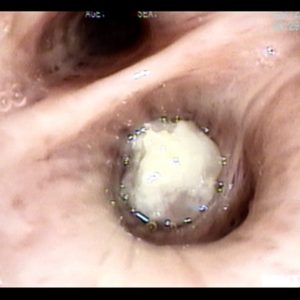
#258This pyramidal formation that emerges from the left source bronchus can be confused with a bronchial tumor, although it is an aged and retained blood clot that acquires this coloration composed of gray and burgundy. Note the normal environment of the surrounding mucosa.
This pyramidal formation that emerges from the left source bronchus can be confused with a bronchial tumor, although it is an aged and retained blood clot that acquires this coloration composed of gray and burgundy.
Note the normal environment of the surrounding mucosa.
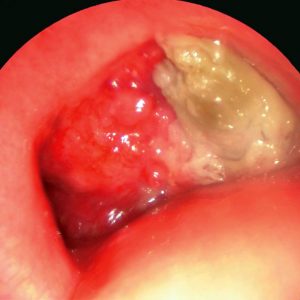
#257A fairly common presentation of large bronchial tumors , in which the surface suffers a necrosis due to being away from its base of implantation, better vascularized, and acquires a whitish creamy appearance.
A fairly common presentation of large bronchial tumors, in which the surface suffers a necrosis due to being away from its base of implantation, better vascularized, and acquires a whitish creamy appearance.
#256The left upper lobe is occluded by an anomalous tissue, with a homogeneous and somewhat rough surface. The secondary carina looks curiously linear and straight. In the distance you can see the lower lobular, poorly lit.
The left upper lobe is occluded by an anomalous tissue, with a homogeneous and somewhat rough surface.
The secondary carina looks curiously linear and straight.
In the distance you can see the lower lobular, poorly lit.
#255View from the left source bronchus, near its fork in the carrefour. A prominent mass rises on its side and bottom walls. The longitudinal folds, very accentuated, lose their parallelism and tend to meet as they enter the upper and lower lobe bronchi. The widening of the secondary carina and the intense edema contribute to the reduction of the bronchial lumen.
View from the left source bronchus, near its fork in the carrefour.
A prominent mass rises on its side and bottom walls.
The longitudinal folds, very accentuated, lose their parallelism and tend to meet as they enter the upper and lower lobe bronchi.
The widening of the secondary carina and the intense edema contribute to the reduction of the bronchial lumen.
#254Tumor with «glove finger» appearance. This lesion emerges from the right source bronchus and its independence from the bronchial wall is quite evident. It may have a base of implantation much farther from its visible proximal end. The tracheal carina is pushed to the left.
Tumor with «glove finger» appearance.
This lesion emerges from the right source bronchus and its independence from the bronchial wall is quite evident.
It may have a base of implantation much farther from its visible proximal end.
The tracheal carina is pushed to the left.
#253With a rather classic appearance, this large formation with large submucosal vessels, arises from the posterior tracheal wall and also from the angle that it forms with the lateral walls, as usually happens in adenoid cystic tumors .
With a rather classic appearance, this large formation with large submucosal vessels, arises from the posterior tracheal wall and also from the angle that it forms with the lateral walls, as usually happens in adenoid cystic tumors.
#252The entrance to the upper right lobe bronchus is occluded. In this case, the adenoma presents a familiar aspect. The surface is smooth and a dense submucosal vascular network gives it an intense coloration.
The entrance to the upper right lobe bronchus is occluded.
In this case, the adenoma presents a familiar aspect.
The surface is smooth and a dense submucosal vascular network gives it an intense coloration.
#251Unlike the previous case , this adenoma that obstructs the left source bronchus presents several protrusions in its surface. Thus, it is easily confused with other types of tumors, especially due to the enlarged appearance of the tracheal carina.
Unlike the previous case, this adenoma that obstructs the left source bronchus presents several protrusions in its surface.
Thus, it is easily confused with other types of tumors, especially due to the enlarged appearance of the tracheal carina.
#250The carial edge can be seen at 9 o’clock. At close range, a large mass occupies the right source bronchus, surmounted by bubbles formed by the instilled saline solution. The formation is smooth, as happens in most adenomas, and the entire mucosa of the surrounding tissue is completely normal.
The carial edge can be seen at 9 o’clock.
At close range, a large mass occupies the right source bronchus, surmounted by bubbles formed by the instilled saline solution.
The formation is smooth, as happens in most adenomas, and the entire mucosa of the surrounding tissue is completely normal.
#249Carcinoid tumor that appears with a fairly classic appearance. Due to its smooth convexity and its free contact with the bronchial walls it is compared with a «glove finger».
Carcinoid tumor that appears with a fairly classic appearance.
Due to its smooth convexity and its free contact with the bronchial walls it is compared with a «glove finger».
#2472This lesion, somewhat lobed on its surface, completely seals the entrance to the lower lobe bronchus. Photograph of the excised carcinoma.
This lesion, somewhat lobed on its surface, completely seals the entrance to the lower lobe bronchus.
Photograph of the excised carcinoma.
#246Here you can see a cryobiopsy probe contacting a formation that subocludes the right source bronchus. The cryoprobe reaches a temperature of -79º C at its end and adheres firmly to the tissue, making it easy to remove.
Here you can see a cryobiopsy probe contacting a formation that subocludes the right source bronchus.
The cryoprobe reaches a temperature of -79º C at its end and adheres firmly to the tissue, making it easy to remove.
#245Location combination: Endoluminal vegetative formation and intramural lesion are present in this subocclusive lesion of the right upper lobe.
Location combination: Endoluminal vegetative formation and intramural lesion are present in this subocclusive lesion of the right upper lobe.
#244Blend of coloration: exophytic lesion showing an irregular and pinkish polylobulated area while its most prominent end is creamy white, as a product of necrosis in a distal area of the tumor.
Blend of coloration: exophytic lesion showing an irregular and pinkish polylobulated area while its most prominent end is creamy white, as a product of necrosis in a distal area of the tumor.
#243«Threatening» aspect. With its reddish coloration that declares a sufficient vascularization, and its thick vessels that crown the visible hemisphere of this tumor that from the entrance of the right source bronchus, it challenges the bronchoscopist, tempting him to defer the biopsy to a safer time. A rigid bronchoscopy will make it possible to thermocoagulate the vessels and reduce the risk of hemorrhage. Myofibroblastic or pseudoinflammatory tumor looks similar to a carcinoid tumor. Jose de San Martin Clinic Hospital Buenos Aires
«Threatening» aspect.
With its reddish coloration that declares a sufficient vascularization, and its thick vessels that crown the visible hemisphere of this tumor that from the entrance of the right source bronchus, it challenges the bronchoscopist, tempting him to defer the biopsy to a safer time.
A rigid bronchoscopy will make it possible to thermocoagulate the vessels and reduce the risk of hemorrhage.
Myofibroblastic or pseudoinflammatory tumor looks similar to a carcinoid tumor.
Jose de San Martin Clinic Hospital
Buenos Aires
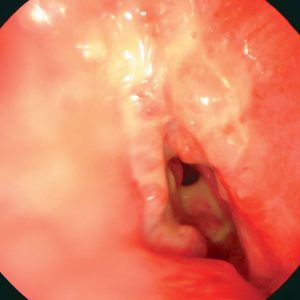
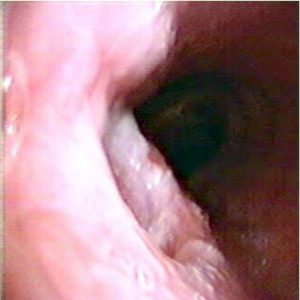
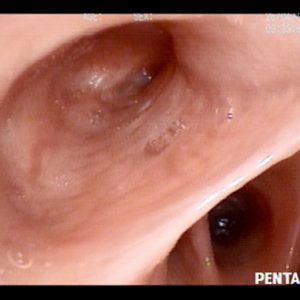
#242Here the communication with the esophagus is so wide that it occupies the entire diameter of the tracheal posterior wall. The condition responds to a long list of causes that include therapeutic accidents and is favored by the chronic prostration and poor nutrition of these patients. Cetrángolo Hospital
Here the communication with the esophagus is so wide that it occupies the entire diameter of the tracheal posterior wall.
The condition responds to a long list of causes that include therapeutic accidents and is favored by the chronic prostration and poor nutrition of these patients.
Cetrángolo Hospital
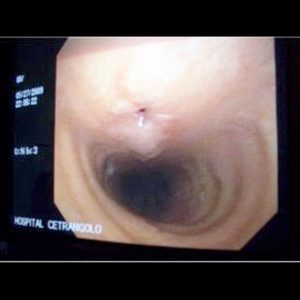
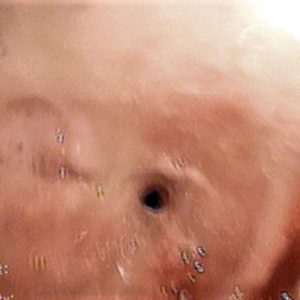
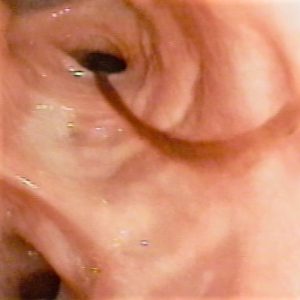
#241This tracheoesophageal fistula has been surrounded by an over-elevated environment that crowns the central depression with its punctiform orifice. Cetrángolo Hospital
This tracheoesophageal fistula has been surrounded by an over-elevated environment that crowns the central depression with its punctiform orifice.
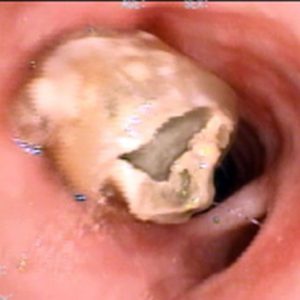
Cetrángolo Hospital
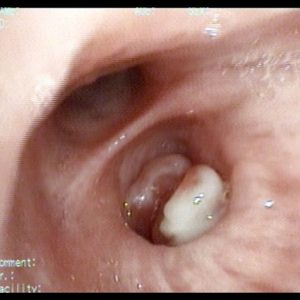
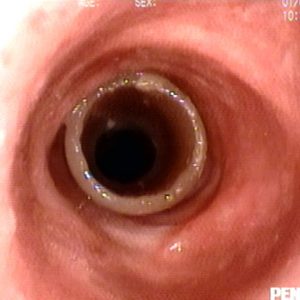
#240Tracheoesophageal fistula. Its edges have been epithelialized and after its circular access a feeding tube is observed. Francisco Muñiz Hospital
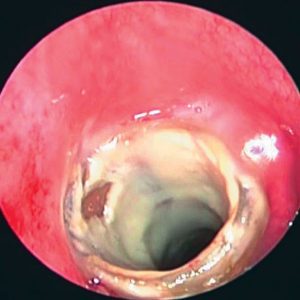
Tracheoesophageal fistula.
Its edges have been epithelialized and after its circular access a feeding tube is observed.
Francisco Muñiz Hospital
#239Fistula occlusion. A cyanoacrylate deposit fills a large fistula in the right source bronchus. Undesirable mediate complication of a pneumonectomy. Italian Hospital
Fistula occlusion.
A cyanoacrylate deposit fills a large fistula in the right source bronchus.
Undesirable mediate complication of a pneumonectomy.
Italian Hospital
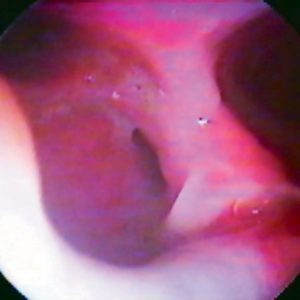
#238Tracheoesophageal fistula: Intense edema of the entire tracheal mucosa, with extensive areas of submucosal hemorrhage. The edema becomes irregular in the posterior wall and a U-shaped fissure occupies the center of the image. The dark coloration of its path is due to the methylene blue instilled in the esophagus for its detection. Isidoro R., Sinus Tracheal Fissure. RAMR 2015; 3: 211-212.
Tracheoesophageal fistula: Intense edema of the entire tracheal mucosa, with extensive areas of submucosal hemorrhage.
The edema becomes irregular in the posterior wall and a U-shaped fissure occupies the center of the image.
The dark coloration of its path is due to the methylene blue instilled in the esophagus for its detection.
Isidoro R., Sinus Tracheal Fissure.
RAMR 2015; 3: 211-212.
#237View of the carina and the birth of the main bronchi. A large depression precedes the orifice of the left source bronchus and communicates with the esophagus: Tracheobronchoesophageal fistula due to closed thorax trauma.
View of the carina and the birth of the main bronchi.
A large depression precedes the orifice of the left source bronchus and communicates with the esophagus: Tracheobronchoesophageal fistula due to closed thorax trauma.
#2352The dark and patchy coloration that becomes confluent in all the trachea closest to this image, is due to the presence of abundant accumulated carbon particles and combined with mucus. They were inhaled during a fire and may exist with or without airway burn. The endoscopic examination is «poorly lit»; this effect is a consequence of the absorption of light by the dark material that covers the mucosa. A similar phenomenon occurs in exploratory endoscopy of copious hemoptysis in which the blood absorbs much of the illumination provided by the endoscope. Particles phagocytized by macrophages can be seen in the sputum examination. Francisco Muñiz Hospital
The dark and patchy coloration that becomes confluent in all the trachea closest to this image, is due to the presence of abundant accumulated carbon particles and combined with mucus.
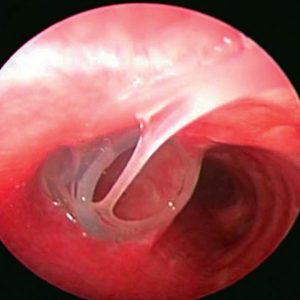
They were inhaled during a fire and may exist with or without airway burn.
The endoscopic examination is «poorly lit»; this effect is a consequence of the absorption of light by the dark material that covers the mucosa.
A similar phenomenon occurs in exploratory endoscopy of copious hemoptysis in which the blood absorbs much of the illumination provided by the endoscope.
Particles phagocytized by macrophages can be seen in the sputum examination.
Francisco Muñiz Hospital
#234Burn of the upper airway: large anthracotic macules spread in groups over the mucosa of the tracheal wall, very swollen, after the accidental inhalation of smoke and hot gases.
Burn of the upper airway: large anthracotic macules spread in groups over the mucosa of the tracheal wall, very swollen, after the accidental inhalation of smoke and hot gases.
#233Improper position of a Tutor. Its inner end has separated from the edge of the ostoma and occupies part of the tracheal lumen. It must be corrected by pulling it from its outer branch and then fixing it in the proper position with its retaining ring.
Improper position of a Tutor.
Its inner end has separated from the edge of the ostoma and occupies part of the tracheal lumen.
It must be corrected by pulling it from its outer branch and then fixing it in the proper position with its retaining ring.
#232Internal view of a Tutor who, correctly, supports his wings on the edge of the ostoma. The ostoma tutor is a tube that is inserted through the tracheostomy and fixed inside the trachea with two small wings that prevent accidental removal. It is used as an intermediate step to decannulation to avoid the spontaneous closure of a tracheostomy whose utility is unknown and to ensure that breathing by the natural route is possible and satisfactory.
Internal view of a Tutor who, correctly, supports his wings on the edge of the ostoma.
The ostoma tutor is a tube that is inserted through the tracheostomy and fixed inside the trachea with two small wings that prevent accidental removal.
It is used as an intermediate step to decannulation to avoid the spontaneous closure of a tracheostomy whose utility is unknown and to ensure that breathing by the natural route is possible and satisfactory.
#2302Aneumatosis of the right inferior lobe with evolution to atelectasis due to a carcinoma that occludes its bronchus. The fissure in this lobe will move towards the vertebral column during collapse. The indication of stents in distal or lobar bronchi was controversial (Journal of Bronchology & Interventional Pulmonology 24: 3; 211-215.2017). Here from the inside of a prosthesis in the intermediate bronchus a small cone-shaped stent implanted after resection of the tumor and allowing the re-expansion of the right lower lobe is observed. German Hospital
Aneumatosis of the right inferior lobe with evolution to atelectasis due to a carcinoma that occludes its bronchus.
The fissure in this lobe will move towards the vertebral column during collapse.
The indication of stents in distal or lobar bronchi was controversial (Journal of Bronchology & Interventional Pulmonology 24: 3; 211-215.2017).
Here from the inside of a prosthesis in the intermediate bronchus a small cone-shaped stent implanted after resection of the tumor and allowing the re-expansion of the right lower lobe is observed.
German Hospital
#229Punctate stenosis of the left source bronchus. Sequela of extra primary pulmonary tuberculosis (photograph already exposed in tuberculosis and its sequels).
Punctate stenosis of the left source bronchus.
Sequela of extra primary pulmonary tuberculosis (photograph already exposed in tuberculosis and its sequels).
#2272Proper position: these stents of the tracheal stenosis model were «embraced» by the stenosis and their ends «float» in the trachea avoiding contact with their mucosa and anticipate a stay free of complications.
Proper position: these stents of the tracheal stenosis model were «embraced» by the stenosis and their ends «float» in the trachea avoiding contact with their mucosa and anticipate a stay free of complications.
#226Cured stenosis: just a thin fibrous arch on the floor of the trachea (upper area of the image) and a slight reduction of the light is the result of the repeated dilation treatment. Dilated mucous glands also appear in the foreground of the image.
Cured stenosis: just a thin fibrous arch on the floor of the trachea (upper area of the image) and a slight reduction of the light is the result of the repeated dilation treatment.
Dilated mucous glands also appear in the foreground of the image.
#225The incrustation of secretions occurs more frequently in prostheses of tracheal location and forces their replacement. This stent avoids the restenosis of the surgical reimplantation of the left source bronchus in the trachea, after a severe trauma to the thorax by accident.
The incrustation of secretions occurs more frequently in prostheses of tracheal location and forces their replacement.
This stent avoids the restenosis of the surgical reimplantation of the left source bronchus in the trachea, after a severe trauma to the thorax by accident.
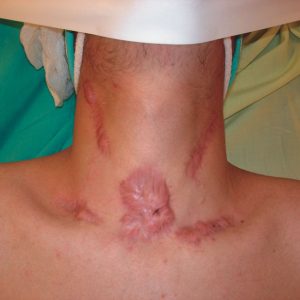
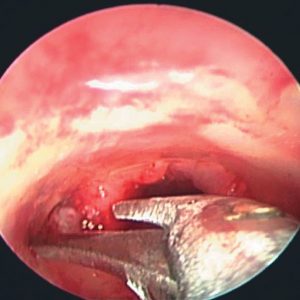
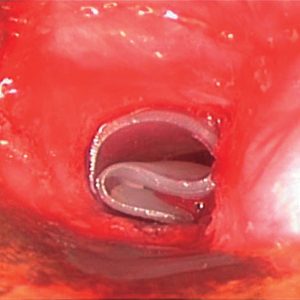
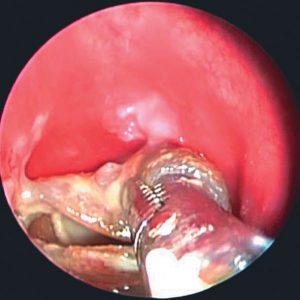
#2223Several keloids on surgical scars on the neck. Keloids are strikingly common in cases where benign tracheal stenosis develops in patients who have been subjected to orotracheal intubation. External appearance of the trachea in the area of the stenosis . Resection and end-to-end anastomosis as the definitive solution for a recurrent stenosis.
Several keloids on surgical scars on the neck.
Keloids are strikingly common in cases where benign tracheal stenosis develops in patients who have been subjected to orotracheal intubation.
External appearance of the trachea in the area of the stenosis.
Resection and end-to-end anastomosis as the definitive solution for a recurrent stenosis.
#221Very thick secretions occupy a stent implanted in a left main bronchus that was sectioned and reinserted in the trachea, away from the carina.
Very thick secretions occupy a stent implanted in a left main bronchus that was sectioned and reinserted in the trachea, away from the carina.
#2183Side cut scissors in «penguin head» ready to make a window in the wall of a silicone stent implanted in the left source bronchus. A positional defect caused the stent to partially obstruct the entry of the ipsilateral upper lobe bronchus, despite several attempts to reposition the prosthesis. Now a metal spike with the hooked end takes the edge of the stent and offers it to the scissors to make the first cut. View of the metal spike with a hooked end.
Side cut scissors in «penguin head» ready to make a window in the wall of a silicone stent implanted in the left source bronchus.
A positional defect caused the stent to partially obstruct the entry of the ipsilateral upper lobe bronchus, despite several attempts to reposition the prosthesis.
Now a metal spike with the hooked end takes the edge of the stent and offers it to the scissors to make the first cut.
View of the metal spike with a hooked end.
#217Arrangement in «omega» of a stent released inside the bronchial lumen. Different maneuvers will be necessary to complete its expansion. This task will be rewarded by the absence of migration that occurs after the implantation of stents that do not expand spontaneously and immediately. This occurs when prostheses of a wide diameter are chosen in relation to the light of the airway to be treated.
Arrangement in «omega» of a stent released inside the bronchial lumen.
Different maneuvers will be necessary to complete its expansion.
This task will be rewarded by the absence of migration that occurs after the implantation of stents that do not expand spontaneously and immediately.
This occurs when prostheses of a wide diameter are chosen in relation to the light of the airway to be treated.
#216Here the alligator clamp takes the edge of a stent . By rotating the clamp, the silicone stent is folded, thus eliminating its radial force, and can be easily extracted.
Here the alligator clamp takes the edge of a stent.
By rotating the clamp, the silicone stent is folded, thus eliminating its radial force, and can be easily extracted.
#215Stringy mucus secretion on the end of a silicone stent in the left bronchus. Due to the anatomical diameter of this bronchus, the 13mm stents are very appropriate for the left source.
Stringy mucus secretion on the end of a silicone stent in the left bronchus.
Due to the anatomical diameter of this bronchus, the 13mm stents are very appropriate for the left source.
#214«Punctiform» light in a tracheal stenosis after intubation. The small diameter of the light produces a distressing situation for the patient; only tolerable because the length of the narrowness is also very short, thus relieving the airflow resistance through the narrow orifice.
«Punctiform» light in a tracheal stenosis after intubation.
The small diameter of the light produces a distressing situation for the patient; only tolerable because the length of the narrowness is also very short, thus relieving the airflow resistance through the narrow orifice.
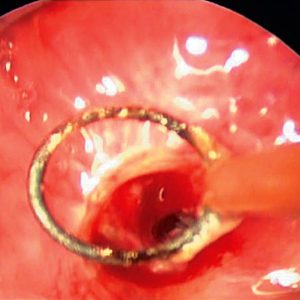
#213A cutting «loop» about to act on the fibrous arch of a tracheal stenosis .
A cutting «loop» about to act on the fibrous arch of a tracheal stenosis.
#212Incrustation of secretions in the walls of a bronchial stent . This drawback is presented with a variable frequency and often the microbial flora is coincident with the one that exists in the dental pieces in poor condition of the patient.
Incrustation of secretions in the walls of a bronchial stent.
This drawback is presented with a variable frequency and often the microbial flora is coincident with the one that exists in the dental pieces in poor condition of the patient.
#211After a year of implantation, this stent has migrated and now, free, rests in the intrathoracic trachea, as seen in the center and the bottom of the image. In the foreground the stenosis presents a wide light, with its two fibrous arches that give it a stable and consolidated appearance. Alejandro Posadas Hospital
After a year of implantation, this stent has migrated and now, free, rests in the intrathoracic trachea, as seen in the center and the bottom of the image.
In the foreground the stenosis presents a wide light, with its two fibrous arches that give it a stable and consolidated appearance.
Alejandro Posadas Hospital
#210Although it could be confused with an enlarged carina, this curious formation in the extrathoracic trachea consists of a medial septum that, as a bridge, joins the anterior wall with the posterior wall and divides the trachea into two conduits, contoured by fibrous arches. Unusual evolution of post-intubation stenosis in a 21-year-old male. Isidoro R., Debais M. Divided Trachea, report of a case. RAMR 2014; 1: 51-52.
Although it could be confused with an enlarged carina, this curious formation in the extrathoracic trachea consists of a medial septum that, as a bridge, joins the anterior wall with the posterior wall and divides the trachea into two conduits, contoured by fibrous arches.
Unusual evolution of post-intubation stenosis in a 21-year-old male.
Isidoro R., Debais M. Divided Trachea, report of a case. RAMR 2014; 1: 51-52.
#209This tracheal stent remains very close to the chordal movement without making contact with them.
This tracheal stent remains very close to the chordal movement without making contact with them.
#208Retention of secretions inside this stent , aggravated by the reduction of the light produced by the presence of the distal granuloma observed at the bottom of the image. This indicates contact of the prosthesis with the mucosa, excessive cough, or both.
Retention of secretions inside this stent, aggravated by the reduction of the light produced by the presence of the distal granuloma observed at the bottom of the image. This indicates contact of the prosthesis with the mucosa, excessive cough, or both.
#207The distal end of this stent rests very close to a spur in the lower lobe. The maximum expiration can reduce the distance between both and allow contact between the stent and the spur, producing an irritative cough that is difficult to suppress, with possible damage to the bronchial mucosa.
The distal end of this stent rests very close to a spur in the lower lobe.
The maximum expiration can reduce the distance between both and allow contact between the stent and the spur, producing an irritative cough that is difficult to suppress, with possible damage to the bronchial mucosa.
#206Stent implanted in intermediate bronchus. Note the uneven widening of the spur of the right upper lobe.
Stent implanted in intermediate bronchus.
Note the uneven widening of the spur of the right upper lobe.
#205After implanting this «Y» shaped stent , the advance of tumor growth into the stent makes it emerge through its right bronchial branch. As an undesired consequence of the subocclusion of this source bronchus, there is an accumulation of secretions at its entrance, indicating a precarious airflow and an ineffective cough.
After implanting this «Y» shaped stent, the advance of tumor growth into the stent makes it emerge through its right bronchial branch.
As an undesired consequence of the subocclusion of this source bronchus, there is an accumulation of secretions at its entrance, indicating a precarious airflow and an ineffective cough.
#204Central and critical tracheal stenosis . Smooth and tense appearance due to congestive edema of the mucosa. Cetrángolo Hospital
Central and critical tracheal stenosis.
Smooth and tense appearance due to congestive edema of the mucosa.
Cetrángolo Hospital
#203Double stent: after the endo-surgical resection of an extensive carcinoma, two silicone stent were applied in the tracheal bifurcation, leaving the carina «enclosed» between them. In the image, the generalized edema dominates the field and very abundant mucopurulent secretions accumulate around the prosthesis and inside one of them, in which a bubble has formed at the time of photographic exposure.
Double stent: after the endo-surgical resection of an extensive carcinoma, two silicone stent were applied in the tracheal bifurcation, leaving the carina «enclosed» between them.
In the image, the generalized edema dominates the field and very abundant mucopurulent secretions accumulate around the prosthesis and inside one of them, in which a bubble has formed at the time of photographic exposure.
#202Appearance of the tracheal mucosa after the removal of a stent . There is an arch of residual stenosis , still congestive, and a mucosal bed with bulging edema due to prolonged contact with the prosthesis in that area.
Appearance of the tracheal mucosa after the removal of a stent.
There is an arch of residual stenosis, still congestive, and a mucosal bed with bulging edema due to prolonged contact with the prosthesis in that area.
#201The metallic olive crosses the narrowness of the stenosis gently, forcing the opening of the tracheal lumen. The central hole of the instrument allows the passage of air preventing the complete interruption of ventilation during the procedure.
The metallic olive crosses the narrowness of the stenosis gently, forcing the opening of the tracheal lumen.
The central hole of the instrument allows the passage of air preventing the complete interruption of ventilation during the procedure.
#1992A dilation balloon full of saline solution, exerts circumferential pressure during dilation of a stenosis . The appearance of the tracheal wall, edematous and congestive, can be appreciated after decompression of the elastic balloon. Note the distance between the balloon and the mucosa as a result of the progressive dilation maneuver.
A dilation balloon full of saline solution, exerts circumferential pressure during dilation of a stenosis.
The appearance of the tracheal wall, edematous and congestive, can be appreciated after decompression of the elastic balloon.
Note the distance between the balloon and the mucosa as a result of the progressive dilation maneuver.
#198These smooth protrusions that seem to pile on the posterior tracheal wall or mucous membrane, correspond to granulomas originated by a fearsome situation: the « tracheal cannula tip injury». The lack of stable fixation of the pavilion of the tracheostomy cannula against the neck, allows movements of the device that tends to swing on its support in the stoma causing its end or tip of the cannula to damage the tracheal mucosa. The phenomenon is particularly true when it has been connected to a mechanical ventilation system, adding weight and unwanted movement to the cannula. Alejandro Posadas Hospital
These smooth protrusions that seem to pile on the posterior tracheal wall or mucous membrane, correspond to granulomas originated by a fearsome situation: the «tracheal cannula tip injury».
The lack of stable fixation of the pavilion of the tracheostomy cannula against the neck, allows movements of the device that tends to swing on its support in the stoma causing its end or tip of the cannula to damage the tracheal mucosa.
The phenomenon is particularly true when it has been connected to a mechanical ventilation system, adding weight and unwanted movement to the cannula.
Alejandro Posadas Hospital
#197A rare form of complex stenosis is double stenosis . Their treatment differs considerably according to their anatomical location: very separate, close together or even worse, as seen in the reconstruction image: «neither together nor separated».
A rare form of complex stenosis is double stenosis.
Their treatment differs considerably according to their anatomical location: very separate, close together or even worse, as seen in the reconstruction image: «neither together nor separated».
#196Tracheal Stent after 10 months remain implanted. The walls of the endoprosthesis are free of secretions and incrustations, but several granulomas have developed in the mucosa close to its distal end. One, very bulky and bulgy, sits on the entire back wall.
Tracheal Stent after 10 months remain implanted.
The walls of the endoprosthesis are free of secretions and incrustations, but several granulomas have developed in the mucosa close to its distal end.
One, very bulky and bulgy, sits on the entire back wall.
#195«Ideal» position for a tracheal stent in the treatment of unresectable stenosis . The device is «trapped» in the area of the stenosis and its anterior end is «floating» in the tracheal lumen. Thus, this position reduces the possibility of the appearance of granulomas. The distal end of the prosthesis is still somewhat folded. The defect can be corrected manually with a long clamp, or spontaneously in the days following the implant.
«Ideal» position for a tracheal stent in the treatment of unresectable stenosis.
The device is «trapped» in the area of the stenosis and its anterior end is «floating» in the tracheal lumen.
Thus, this position reduces the possibility of the appearance of granulomas.
The distal end of the prosthesis is still somewhat folded.
The defect can be corrected manually with a long clamp, or spontaneously in the days following the implant.
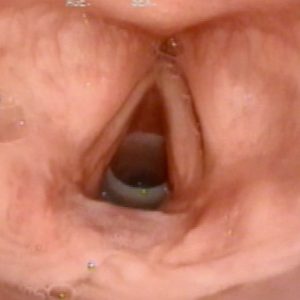
#194Silicone stent acting as a support in a tracheal stenosis at the level of the first rings. The vocal cords are somewhat thickened and with obvious congestion in the mucosa in its posterior third, close to the arytenoids.
Silicone stent acting as a support in a tracheal stenosis at the level of the first rings.
The vocal cords are somewhat thickened and with obvious congestion in the mucosa in its posterior third, close to the arytenoids.
#193Complex tracheal stenosis after endo-surgical treatment. Image taken one month after a stent, that remained for 2 years, was removed. There is sufficient tracheal light and some changes in its relief due to the presence of granulomas on the left wall. The edema erases the longitudinal folds and the silhouette of the cartilages.
Complex tracheal stenosis after endo-surgical treatment.
Image taken one month after a stent, that remained for 2 years, was removed.
There is sufficient tracheal light and some changes in its relief due to the presence of granulomas on the left wall.
The edema erases the longitudinal folds and the silhouette of the cartilages.
#192Radial cuts at hours 3 and 9, performed with electrocautery. Procedure prior to dilation of a simple tracheal stenosis . The radial cut is also a safety measure reducing the risks of rupture of the posterior membrane during the dilation maneuvers.
Radial cuts at hours 3 and 9, performed with electrocautery.
Procedure prior to dilation of a simple tracheal stenosis.
The radial cut is also a safety measure reducing the risks of rupture of the posterior membrane during the dilation maneuvers.
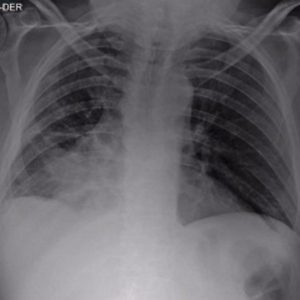
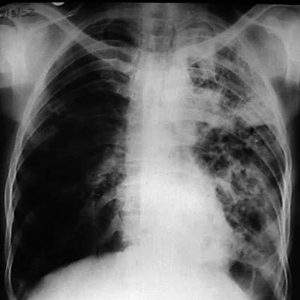
#1902The light from the left source bronchus is greatly reduced due to a stricture established after a complete bronchial rupture due to chest trauma. The reduction of the bronchial diameter is concentric and progressive or «infundibuliform». The edema thickens the mucosa and the cartilaginous reliefs and also the linear folds of the posterior wall of the bronchus are lost. X-ray of the previous case: «opaque hemithorax». The entire left field is completely opaque, homogeneously and from base to vertex. The «sign of the naked spine» and a posteroinferior pneumonocele are present due to retraction, as well as the rise of the gastric chamber, indicating pulmonary atelectasis.
The light from the left source bronchus is greatly reduced due to a stricture established after a complete bronchial rupture due to chest trauma.
The reduction of the bronchial diameter is concentric and progressive or «infundibuliform».
The edema thickens the mucosa and the cartilaginous reliefs and also the linear folds of the posterior wall of the bronchus are lost.
X-ray of the previous case: «opaque hemithorax».
The entire left field is completely opaque, homogeneously and from base to vertex.
The «sign of the naked spine» and a posteroinferior pneumonocele are present due to retraction, as well as the rise of the gastric chamber, indicating pulmonary atelectasis.
#189Tracheal stenosis that forms a double diaphragm of fibrous tissue. At the distance, a second stenosis can be seen with little punctate light, the only way available for ventilation.
Tracheal stenosis that forms a double diaphragm of fibrous tissue.
At the distance, a second stenosis can be seen with little punctate light, the only way available for ventilation.
#188Strangely, a «T» tube has lost its alignment with the trachea. Inspection from the glottis identifies its end that rests on inflamed tissue in the posterior wall, full of secretions. Alejandro Posadas Hospital
Strangely, a «T» tube has lost its alignment with the trachea.
Inspection from the glottis identifies its end that rests on inflamed tissue in the posterior wall, full of secretions.
Alejandro Posadas Hospital
#187Consolidated stenosis , central and short, below the prominence of the first tracheal ring. Asymptomatic, because its diameter exceeds 8mm. (Isidoro, R. Prolonged prolonged implant prosthesis: 10 years, RAMR 2016; 3: 250-257)
Consolidated stenosis, central and short, below the prominence of the first tracheal ring.
Asymptomatic, because its diameter exceeds 8mm.
(Isidoro, R. Prolonged prolonged implant prosthesis: 10 years, RAMR 2016; 3: 250-257)
#186Central benign tracheal stenosis , with several fibrous arches. Its thin edges together with its pallor indicate an absent inflammatory state. Condition very suitable for open surgical treatment.
Central benign tracheal stenosis, with several fibrous arches.
Its thin edges together with its pallor indicate an absent inflammatory state.
Condition very suitable for open surgical treatment.
#1842Subglottis : at short distance from the vocal cords a simple stenosis , in diaphragm, considerably reduces the light. Ventilation is possible thanks to a central and circular hole, with a small marginal nodule. The same volume of inhaled air must increase its speed to enter through a narrow light, becoming turbulent, which causes visible hyperemia in the mucosa. Enlarged photograph of the case. Note the thin and taut edges of the central diaphragm hole. Almost always yield immediately to the dilation maneuvers.
Subglottis: at short distance from the vocal cords a simple stenosis, in diaphragm, considerably reduces the light.
Ventilation is possible thanks to a central and circular hole, with a small marginal nodule.
The same volume of inhaled air must increase its speed to enter through a narrow light, becoming turbulent, which causes visible hyperemia in the mucosa.
Enlarged photograph of the case.
Note the thin and taut edges of the central diaphragm hole.
Almost always yield immediately to the dilation maneuvers.
#183Laryngeal stenosis that has evolved towards the total closure of light at the level of the subglottis. The patient suffers a post-intubation rash with damage to the laryngeal cartilages. It develops a subglottic stenosis that, when it becomes symptomatic or critical, receives the relief of the tracheostomy at the hands of the surgeon. However, this «defunctionalization» of the larynx is what precedes its complete closure. When it occurs at a lower level and affects the initial trachea, it constitutes the « blind trachea «.
Laryngeal stenosis that has evolved towards the total closure of light at the level of the subglottis.
The patient suffers a post-intubation rash with damage to the laryngeal cartilages.
It develops a subglottic stenosis that, when it becomes symptomatic or critical, receives the relief of the tracheostomy at the hands of the surgeon. However, this «defunctionalization» of the larynx is what precedes its complete closure.
When it occurs at a lower level and affects the initial trachea, it constitutes the «blind trachea«.
#1803a) View of the glottis in abduction. The tracheal lumen is missing at the bottom of the image due to a stenosis. b) Same case. c) Same case: view of the laryngotracheal junction where the complete closure of the light or « blind trachea » can be seen at the level of the first ring.
a) View of the glottis in abduction.
The tracheal lumen is missing at the bottom of the image due to a stenosis.
b) Same case.
c) Same case: view of the laryngotracheal junction where the complete closure of the light or «blind trachea» can be seen at the level of the first ring.
#179Chest x-ray with loss of volume of the middle lobe in patient with sequelae of tuberculosis and a bronchoscopy that finds the stenosis of the bronchus (upper left quadrant of the image). Brock syndrome or middle lobe syndrome.
Chest x-ray with loss of volume of the middle lobe in patient with sequelae of tuberculosis and a bronchoscopy that finds the stenosis of the bronchus (upper left quadrant of the image).
Brock syndrome or middle lobe syndrome.
#178Triangular light at the site of the old tracheostomy, where the damage or ablation of the cartilage causes a local malacia with total collapse during cough.
Triangular light at the site of the old tracheostomy, where the damage or ablation of the cartilage causes a local malacia with total collapse during cough.
#177This fairly compact clot of incredible size was lodged in the right source bronchus, with the consequent pulmonary atelectasis. In spite of its volume, it was expelled by the pressures generated by the cough.
This fairly compact clot of incredible size was lodged in the right source bronchus, with the consequent pulmonary atelectasis.
In spite of its volume, it was expelled by the pressures generated by the cough.
#176This small «bronchial plug» of rolled gauze allows to stop a serious hemorrhage when the bronchus is occluded with it. It is applied directly with the rigid bronchoscopy clamp. The long linen thread that holds it will come out through the patient’s mouth and at the moment of removing it, it is only necessary to pull it to extract the plug.
This small «bronchial plug» of rolled gauze allows to stop a serious hemorrhage when the bronchus is occluded with it.
It is applied directly with the rigid bronchoscopy clamp.
The long linen thread that holds it will come out through the patient’s mouth and at the moment of removing it, it is only necessary to pull it to extract the plug.
#175Haemostasis balloon with its mooring to the flexible bronchoscope channel, which will guide it to the bronchus to occlude.
Haemostasis balloon with its mooring to the flexible bronchoscope channel, which will guide it to the bronchus to occlude.
#174Although the title exaggerates its condition, large blood clots that are not removed in time suffer from drying and hardening that require a rigid bronchoscopy for removal. Most commonly occurs in patients who are under respiratory assistance with insufficiently humidified gaseous mixture.
Although the title exaggerates its condition, large blood clots that are not removed in time suffer from drying and hardening that require a rigid bronchoscopy for removal.
Most commonly occurs in patients who are under respiratory assistance with insufficiently humidified gaseous mixture.
#173Line of blood that discovers the bronchus that causes hemoptysis. Sometimes the bronchoscopy can establish the anatomical origin of the hemoptysis, although a trace as clear as the one of the photograph should not be expected. Usually the fresh blood is distributed by the cough and the oldest one coagulates and fragments, so it is seen in different areas of the airway. Then the bronchoscopist makes silence. To ensure the origin of hemoptysis, it is imperative to observe the production and reproduction of blood from the same bronchus.
Line of blood that discovers the bronchus that causes hemoptysis.
Sometimes the bronchoscopy can establish the anatomical origin of the hemoptysis, although a trace as clear as the one of the photograph should not be expected. Usually the fresh blood is distributed by the cough and the oldest one coagulates and fragments, so it is seen in different areas of the airway. Then the bronchoscopist makes silence. To ensure the origin of hemoptysis, it is imperative to observe the production and reproduction of blood from the same bronchus.
#1712After a few days, the clot begins to fade, gradually abandoning its original burgundy color. A few more days: before being spontaneously eliminated, the clot, now pale yellowish, retracts, losing volume and increasing its consistency, so that it can be confused with a neoformation.
After a few days, the clot begins to fade, gradually abandoning its original burgundy color.
A few more days: before being spontaneously eliminated, the clot, now pale yellowish, retracts, losing volume and increasing its consistency, so that it can be confused with a neoformation.
#170In the flexible bronchoscopy of the previous case, the entrance to the cavity is found through two bronchi separated by its spur, producing a double sign of the « black hole «. Hospital Francisco Muñiz
In the flexible bronchoscopy of the previous case, the entrance to the cavity is found through two bronchi separated by its spur, producing a double sign of the «black hole«.
Hospital Francisco Muñiz
#169The chest radiograph was taken without the necessary centering, as shown by the asymmetry between the clavicles and the transverse processes, generating a false image of left pulmonary retraction, (sign of the «naked column»). A confusing destructive pattern occupies all that hemithorax in which a system of several lung cavities is hidden. Francisco Muñiz Hospital
The chest radiograph was taken without the necessary centering, as shown by the asymmetry between the clavicles and the transverse processes, generating a false image of left pulmonary retraction, (sign of the «naked column»).
A confusing destructive pattern occupies all that hemithorax in which a system of several lung cavities is hidden.
Francisco Muñiz Hospital
#1672It is one of the three ways in which it affects the lung. View of the interior of a cavity with colonies of Aspergillus fumigatus . The fungus produces a local disorder of coagulation and can cause serious and fatal hemoptysis. CT scan of the previous case in which the aspergilloma is observed as a prominence in the posterior wall of the cavity.
It is one of the three ways in which it affects the lung.
View of the interior of a cavity with colonies of Aspergillus fumigatus.
The fungus produces a local disorder of coagulation and can cause serious and fatal hemoptysis.
CT scan of the previous case in which the aspergilloma is observed as a prominence in the posterior wall of the cavity.
#1652On the right, the presence of the «black hole» sign announces the existence of the cavity. The mucosa is edematized and the division spur has lost its edge, becoming blunt. View of the entrance to the cavity
On the right, the presence of the «black hole» sign announces the existence of the cavity.
The mucosa is edematized and the division spur has lost its edge, becoming blunt.
View of the entrance to the cavity
#164Inspection of the interior of a cave is an infrequent act. Small bronchi with tiny spurs may appear on its wall.
Inspection of the interior of a cave is an infrequent act.
Small bronchi with tiny spurs may appear on its wall.
#163Punctate stenosis of the left source bronchus. Sequela of bronchial tuberculosis .
Punctate stenosis of the left source bronchus.
Sequela of bronchial tuberculosis.
#162This circular area over-raised and whitish center is easily impacted during the biopsy revealing the appearance of caseum. Future tuberculous gangliobronchial fistula .
This circular area over-raised and whitish center is easily impacted during the biopsy revealing the appearance of caseum.
Future tuberculous gangliobronchial fistula.
#161View from the intrathoracic trachea. These source bronchi are «reunited». Note that the separation angle has been reduced, giving a singular aspect of parallelism. The posterior tracheal wall is also modified. The changes are due to a thoracoplasty of six ribs, which has included the first, as a complementary surgical treatment for multidrug-resistant pulmonary tuberculosis .
View from the intrathoracic trachea.
These source bronchi are «reunited».
Note that the separation angle has been reduced, giving a singular aspect of parallelism.
The posterior tracheal wall is also modified.
The changes are due to a thoracoplasty of six ribs, which has included the first, as a complementary surgical treatment for multidrug-resistant pulmonary tuberculosis.
#160Bulging formation in the bronchial wall that hides the outlet of the fistula.
Bulging formation in the bronchial wall that hides the outlet of the fistula.
#159The medial wall of the right source bronchus shows an anfractuous and irregular opening as a result of a tuberculous lymphadenitis that discharges its caseous content into the bronchial lumen.
The medial wall of the right source bronchus shows an anfractuous and irregular opening as a result of a tuberculous lymphadenitis that discharges its caseous content into the bronchial lumen.
#158Bulging of the wall at the entrance to the right source bronchus that ends in a formation reminiscent of the pustules. The biopsy of this mamelon is followed by the appearance of caseum, which is the beginning of the development of a tuberculous gangliobronchial fistula .
Bulging of the wall at the entrance to the right source bronchus that ends in a formation reminiscent of the pustules.
The biopsy of this mamelon is followed by the appearance of caseum, which is the beginning of the development of a tuberculous gangliobronchial fistula.
#157View of the very swollen laryngeal crown. It has lost the usual relief of its cartilaginous skeleton and a disseminated granulation is irregularly distributed in the mucosa. The vocal cords also affected, are asymmetrically thickened and deformed.
View of the very swollen laryngeal crown.
It has lost the usual relief of its cartilaginous skeleton and a disseminated granulation is irregularly distributed in the mucosa.
The vocal cords also affected, are asymmetrically thickened and deformed.
#156View of the precarinal trachea with bulging of the posterior wall. Its folds are well marked and «tensed» to surround the carina, grossly enlarged on its edge and its slopes. The congestion of the mucosa is irregular because its nutrient vessels were trapped by regional tumor growth. Alejandro Posadas Hospital
View of the precarinal trachea with bulging of the posterior wall.
Its folds are well marked and «tensed» to surround the carina, grossly enlarged on its edge and its slopes.
The congestion of the mucosa is irregular because its nutrient vessels were trapped by regional tumor growth.
Alejandro Posadas Hospital
#155Carina in «saddle» or «book spine». The tracheal wall and the main bronchi are displaced forward. There is moderate congestion of the mucosa. The border of the carina has disappeared due to the involvement of the subcarinal lymph nodes of group 7, due to a carcinoma.
Carina in «saddle» or «book spine».
The tracheal wall and the main bronchi are displaced forward.
There is moderate congestion of the mucosa.
The border of the carina has disappeared due to the involvement of the subcarinal lymph nodes of group 7, due to a carcinoma.
#1496Different forms of widening of the main carina, without disruption of the mucosa: a) Widening at the expense of the carinal edge. b) Widening at the expense of the anterior triangle. c) At the expense of the right slope. d) At the expense of both sides. e) Total widening of the carina. f) Combined broadening, with deformation of the light and distortion of the longitudinal folds. All changes without disruption of the mucosa.
Different forms of widening of the main carina, without disruption of the mucosa:
a) Widening at the expense of the carinal edge.
b) Widening at the expense of the anterior triangle.
c) At the expense of the right slope.
d) At the expense of both sides.
e) Total widening of the carina.
f) Combined broadening, with deformation of the light and distortion of the longitudinal folds. All changes without disruption of the mucosa.
#148Trachea severely affected by a carcinoma that sits on the posterior wall of the intrathoracic and precarinal portion with 50% light reduction.
Trachea severely affected by a carcinoma that sits on the posterior wall of the intrathoracic and precarinal portion with 50% light reduction.
#147This voluminous formation seems to occupy all the light and deprives us of explaining how distal pulmonary ventilation is achieved. The reason is that before the muscle relaxation caused by general anesthesia, the tracheal diameter was greater and thus allowed air passage through the periphery of this large occupant lesion.
This voluminous formation seems to occupy all the light and deprives us of explaining how distal pulmonary ventilation is achieved.
The reason is that before the muscle relaxation caused by general anesthesia, the tracheal diameter was greater and thus allowed air passage through the periphery of this large occupant lesion.
#146Tumor of smooth surface and circumscribed aspect occupies the center of the tracheal lumen, reaching the height of its first ring.
Tumor of smooth surface and circumscribed aspect occupies the center of the tracheal lumen, reaching the height of its first ring.
#145Irregular edema in «street cobblestones» of the tracheal wall due to neoplastic embolisms in the submucosal lymphatics.
Irregular edema in «street cobblestones» of the tracheal wall due to neoplastic embolisms in the submucosal lymphatics.
#144In this case, a cystic lymphangioma in the neck barely deflects the trachea. At hour 4 and 5, the imprint of the rings has been lost by the smooth and regular edema of the mucosa.
In this case, a cystic lymphangioma in the neck barely deflects the trachea.
At hour 4 and 5, the imprint of the rings has been lost by the smooth and regular edema of the mucosa.
#143Osteochondroplastic tracheopathy: tracheal aspect very different from its usual anatomical conformation. Multiple hard nodular excrescences, irregularly distributed over the tracheal cartilages, upholstered by normal mucosa. Osteoplastic tracheopathy is an infrequent and asymptomatic condition. Alejandro Posadas Hospital
Osteochondroplastic tracheopathy: tracheal aspect very different from its usual anatomical conformation.
Multiple hard nodular excrescences, irregularly distributed over the tracheal cartilages, upholstered by normal mucosa.
Osteoplastic tracheopathy is an infrequent and asymptomatic condition.
Alejandro Posadas Hospital
#142Photograph of a tracheal pseudomembrane extracted under rigid bronchoscopy, in a patient with obstructive symptoms and a history of recent orotracheal intubation.
Photograph of a tracheal pseudomembrane extracted under rigid bronchoscopy, in a patient with obstructive symptoms and a history of recent orotracheal intubation.
#141Trachea in «saber scabbard». Notable reduction of its transverse diameter, due to the compression exerted by paratracheal adenomegalies of group 2 and 4. The mucosa is thickened by regular edema.
Trachea in «saber scabbard».
Notable reduction of its transverse diameter, due to the compression exerted by paratracheal adenomegalies of group 2 and 4.
The mucosa is thickened by regular edema.
#140Severe distortion of the precarinal trachea by compression that elevates the folds and deforms the entrance of the main bronchi. The carina, although very asymmetric, remains fine.
Severe distortion of the precarinal trachea by compression that elevates the folds and deforms the entrance of the main bronchi.
The carina, although very asymmetric, remains fine.
#139On the compression of the posterior wall protrudes a submucous and smooth protrusion. Towards the bottom of the image, one can guess the great widening of the tracheal carina.
On the compression of the posterior wall protrudes a submucous and smooth protrusion.
Towards the bottom of the image, one can guess the great widening of the tracheal carina.
#138Low light in «half moon», by strong compression on the tracheal posterior wall.
Low light in «half moon», by strong compression on the tracheal posterior wall.
#137Severe compression on the tracheal posterior wall that advances it toward the light. General and regular edema of the mucosa.
Severe compression on the tracheal posterior wall that advances it toward the light.
General and regular edema of the mucosa.
#136Slight lateral compression and folds that curve and accentuate as a sign of affection adjacent to the posterior tracheal wall.
Slight lateral compression and folds that curve and accentuate as a sign of affection adjacent to the posterior tracheal wall.
#135Actinic necrosis: The trachea presents a reduction of its transverse diameters as a consequence of the acute necrosis of its mucosa, which has allowed the detachment of the tracheal rings at their ends. The organ is disordered in inspiration, narrowing its posterior mucous membrane and deepening intercartilaginous spaces.
Actinic necrosis: The trachea presents a reduction of its transverse diameters as a consequence of the acute necrosis of its mucosa, which has allowed the detachment of the tracheal rings at their ends.
The organ is disordered in inspiration, narrowing its posterior mucous membrane and deepening intercartilaginous spaces.
#134Reduction of tracheal light of combined cause. Visible right posterolateral compression and intramural lesion in the opposite wall that begins to protrude towards the light.
Reduction of tracheal light of combined cause.
Visible right posterolateral compression and intramural lesion in the opposite wall that begins to protrude towards the light.
#133Voluminous and solitary, a pale smooth surface granuloma observes the trachea from its insertion at the edge of the ostoma. Health center Montevideo, Uruguay
Voluminous and solitary, a pale smooth surface granuloma observes the trachea from its insertion at the edge of the ostoma.
Health center
Montevideo, Uruguay
#132Lobulated compression on the mucous membrane of the posterior wall of the extrathoracic trachea.
Lobulated compression on the mucous membrane of the posterior wall of the extrathoracic trachea.
#131Tracheal carina enlarged and fixed. The entrance to the source bronchi is asymmetric due to unequal reduction in its diameters, due to compression and regular edema.
Tracheal carina enlarged and fixed.
The entrance to the source bronchi is asymmetric due to unequal reduction in its diameters, due to compression and regular edema.
#130Left lateral compression on the trachea that can only be appreciated by the asymmetry at the source of the bronchial foramen, towards which appears a formation that emerges from the right lateral wall of the trachea and subocludes the entrance to the main bronchus on the same side. Observe the bulging of the posterior mucous membrane upon entering the left source.
Left lateral compression on the trachea that can only be appreciated by the asymmetry at the source of the bronchial foramen, towards which appears a formation that emerges from the right lateral wall of the trachea and subocludes the entrance to the main bronchus on the same side.
Observe the bulging of the posterior mucous membrane upon entering the left source.
#129Trachea in «saber scabbard». Appropriate analogy for this severe and prolonged compression of the trachea by an endothoracic goiter. The cartilaginous reliefs have been lost and the edema gives a regular appearance to the entire mucosa. The rear wall is now a narrow and straight corridor that leads to the carina. Alejandro Posadas Hospital
Trachea in «saber scabbard».
Appropriate analogy for this severe and prolonged compression of the trachea by an endothoracic goiter.
The cartilaginous reliefs have been lost and the edema gives a regular appearance to the entire mucosa.
The rear wall is now a narrow and straight corridor that leads to the carina.
Alejandro Posadas Hospital
#128In chronic bronchitis, the atrophy of the mucosa gives it a tense and bright appearance, with wide glandular holes and sharp reliefs on the spurs and cartilages.
In chronic bronchitis, the atrophy of the mucosa gives it a tense and bright appearance, with wide glandular holes and sharp reliefs on the spurs and cartilages.
#127Multiple depressions of the bronchial mucosa in the right upper lobe, with anthracotic macules in them.
Multiple depressions of the bronchial mucosa in the right upper lobe, with anthracotic macules in them.
#126Dilated bronchial glands at the entrance of the left source bronchus, at the junction of its lateral wall with the posterior or mucous membrane.
Dilated bronchial glands at the entrance of the left source bronchus, at the junction of its lateral wall with the posterior or mucous membrane.
#125Chronic bronchitis Forward displacement of the posterior wall of the right source bronchus during inspiration. The depth of the longitudinal folds is maintained and does not disappear, as occurs when the wall is «stretched» by extrinsic compression. Here the alteration is dynamic and is due to the flaccidity of the mucosa and the elastic bands.
Chronic bronchitis
Forward displacement of the posterior wall of the right source bronchus during inspiration.
The depth of the longitudinal folds is maintained and does not disappear, as occurs when the wall is «stretched» by extrinsic compression.
Here the alteration is dynamic and is due to the flaccidity of the mucosa and the elastic bands.
#124Chronic bronchitis Thin secretion of mucous aspect in the left source bronchus.
Chronic bronchitis
Thin secretion of mucous aspect in the left source bronchus.
#123On the right side wall there are several cartilaginous prominences that in some cases can acquire a triangular or «spur» shape. No pathological value.
On the right side wall there are several cartilaginous prominences that in some cases can acquire a triangular or «spur» shape.
No pathological value.
#122Triangular aspect of the tracheal lumen, permanent deformation due to chronic cough.
Triangular aspect of the tracheal lumen, permanent deformation due to chronic cough.
#121«Black hole sign» The bronchus that appears in hour 2 leads to a cavity. The light emitted by the endoscope is not refracted or reflected in the walls so the bronchus looks like a dark hole.
«Black hole sign»
The bronchus that appears in hour 2 leads to a cavity.
The light emitted by the endoscope is not refracted or reflected in the walls so the bronchus looks like a dark hole.
#120«Black hole sign» The left lower lobe bronchus does not reflect the light of the endoscope. It appears with a central twilight, because the light is lost inside a cavity with which the bronchus is communicated.
«Black hole sign»
The left lower lobe bronchus does not reflect the light of the endoscope.
It appears with a central twilight, because the light is lost inside a cavity with which the bronchus is communicated.
#119«Sign of the Bubble» positive At hour 11: bubbles are observed in the lateral segmental of the middle lobe (RB4). No bubbles in the medial (RB5), at hour 7 of the photograph: they report the distal obstruction of this bronchus. It indicates that in segment RB5 the bronchoscopist must introduce the biopsy clamp to reach the tumor that obstructs it. The bubble sign was described by Dr. Ricardo Isidoro in 2005, and published much later. (Rev. amer.respiratory med vol.12 no.4 CABA oct./Dec. 2012).
«Sign of the Bubble» positive
At hour 11: bubbles are observed in the lateral segmental of the middle lobe (RB4).
No bubbles in the medial (RB5), at hour 7 of the photograph: they report the distal obstruction of this bronchus.
It indicates that in segment RB5 the bronchoscopist must introduce the biopsy clamp to reach the tumor that obstructs it.
The bubble sign was described by Dr. Ricardo Isidoro in 2005, and published much later. (Rev. amer.respiratory med vol.12 no.4 CABA oct./Dec. 2012).
#118«Positive bubble sign» The lack of bubbles in one of these two segments of the lingula, after instilling physiological solution, indicates that it is occluded distally.
«Positive bubble sign»
The lack of bubbles in one of these two segments of the lingula, after instilling physiological solution, indicates that it is occluded distally.
#117«Bubble sign» The lack of bubble formation in a segmental bronchus during breathing and after the instillation of saline, suggests that this bronchus is obstructed in its distal course.
«Bubble sign»
The lack of bubble formation in a segmental bronchus during breathing and after the instillation of saline, suggests that this bronchus is obstructed in its distal course.
#116Sign of Bence Bence A. E. Bronchoscopy, its indications, El día Med 1942, 25: 634
Sign of Bence
Bence A. E. Bronchoscopy, its indications, El día Med 1942, 25: 634
#115Inflammatory signs dominate the image, but here the light has been lost and the longitudinal folds meet giving this upper lobe a «funnel» aspect: «Bence sign». This indirect sign linked to bronchogenic carcinoma was described in Buenos Aires in 1942 by Dr. Alvaro Bence, in charge of the bronchoscopy service at the Guillermo Rawson hospital since 1938 and a disciple of Haslinguer in Vienna and of Chevalier Jackson in Philadelphia. (Fiorino, A. Historical evolution of bronchoscopy, Rev. Arg of tuberculosis, pulmonary diseases and public health 1987, 3:48)
Inflammatory signs dominate the image, but here the light has been lost and the longitudinal folds meet giving this upper lobe a «funnel» aspect: «Bence sign».
This indirect sign linked to bronchogenic carcinoma was described in Buenos Aires in 1942 by Dr. Alvaro Bence, in charge of the bronchoscopy service at the Guillermo Rawson hospital since 1938 and a disciple of Haslinguer in Vienna and of Chevalier Jackson in Philadelphia. (Fiorino, A. Historical evolution of bronchoscopy, Rev. Arg of tuberculosis, pulmonary diseases and public health 1987, 3:48)
#114View of the trachea with reduction of the light by left lateral compression of its wall, which contains an «intramural, endoluminal and infiltrating» lesion.
View of the trachea with reduction of the light by left lateral compression of its wall, which contains an «intramural, endoluminal and infiltrating» lesion.
#113«Direct and indirect» signs of severe neoplastic process that protrudes towards the tracheal lumen from its posterior wall in the proximity of the bifurcation. Irregular and bulky thickening of the entire mucosa that surrounds an asymmetric tracheal lumen, whose deformation increases when entering the main bronchi. The carnal edge has been lost and its widening is complete.
«Direct and indirect» signs of severe neoplastic process that protrudes towards the tracheal lumen from its posterior wall in the proximity of the bifurcation.
Irregular and bulky thickening of the entire mucosa that surrounds an asymmetric tracheal lumen, whose deformation increases when entering the main bronchi.
The carnal edge has been lost and its widening is complete.
#112Mucopurulent secretions. In patients prostrated or with bronchial immobility due to the passive atelectasis that accompanies the effusions, the secretions can fill the lower bronchi, flooding them. You can see the secretions «retained» within the adynamic bronchi that accumulate there due to their decline.
Mucopurulent secretions.
In patients prostrated or with bronchial immobility due to the passive atelectasis that accompanies the effusions, the secretions can fill the lower bronchi, flooding them.
You can see the secretions «retained» within the adynamic bronchi that accumulate there due to their decline.
#111Soft, very circumscribed superelevation in the intermediate bronchial mucosa that does not go unnoticed due to its noticeable change in coloration that contrasts with superficial vessels.
Soft, very circumscribed superelevation in the intermediate bronchial mucosa that does not go unnoticed due to its noticeable change in coloration that contrasts with superficial vessels.
#110Intramural lesion that in its growth advances into the interior of a trachea with «triangular light» zones, as is usually the case in some cases of chronic cough.
Intramural lesion that in its growth advances into the interior of a trachea with «triangular light» zones, as is usually the case in some cases of chronic cough.
#109Another case of intramural injury (at 10 o’clock), next to an abnormally widened spur.
Another case of intramural injury (at 10 o’clock), next to an abnormally widened spur.
#108Example of «intramural» injury. The tumor deforms the light by occupying the wall without destroying the mucosa yet. Positive biopsy. Undifferentiated carcinoma .
Example of «intramural» injury.
The tumor deforms the light by occupying the wall without destroying the mucosa yet.
Positive biopsy.
Undifferentiated carcinoma.
#107This carcinoma occurs in the trachea with a very smooth surface which will suspect a carcinoid tumor. Note the intense mucosal vascularization that with a more or less parallel disposition is directed to the tumor.
This carcinoma occurs in the trachea with a very smooth surface which will suspect a carcinoid tumor.
Note the intense mucosal vascularization that with a more or less parallel disposition is directed to the tumor.
#106Partial view of the right lower lobe, with segmental basal lines aligned. At hour 11 and in the distance the paracardiac (RB7) is observed, occluded by a smooth and vascularized formation.
Partial view of the right lower lobe, with segmental basal lines aligned.
At hour 11 and in the distance the paracardiac (RB7) is observed, occluded by a smooth and vascularized formation.
#105Remarkable pallor of this bronchial wall that contrasts with the superficial vessels that form small islands. Thickening and rigidity conferred by an adenocarcinoma that has invaded the mediastinum.
Remarkable pallor of this bronchial wall that contrasts with the superficial vessels that form small islands.
Thickening and rigidity conferred by an adenocarcinoma that has invaded the mediastinum.
#104Another form of presentation of the endobronchial tumor that occurs frequently: only whitish formation. It is no more than necrotic tissue on the surface because it is the furthest point from its base of vascularized implantation. The secretions cover it and can dry out due to the disturbance in the airflow produced by the tumor.
Another form of presentation of the endobronchial tumor that occurs frequently: only whitish formation.
It is no more than necrotic tissue on the surface because it is the furthest point from its base of vascularized implantation.
The secretions cover it and can dry out due to the disturbance in the airflow produced by the tumor.
#103Vegetative tumoral formation that occludes the right upper lobe, which also shows a noticeable widening of its spur. The lesion appears with freshly emitted blood due solely to the cough that occurred during the endoscopic exploration. Insufficient local anesthesia will trigger coughing during the examination and spontaneous bleeding will make it difficult to see and accurately during the biopsy.
Vegetative tumoral formation that occludes the right upper lobe, which also shows a noticeable widening of its spur.
The lesion appears with freshly emitted blood due solely to the cough that occurred during the endoscopic exploration.
Insufficient local anesthesia will trigger coughing during the examination and spontaneous bleeding will make it difficult to see and accurately during the biopsy.
#102Close-up image of a bulky tumor that completely obstructs the bronchial lumen. Note the particular arrangement of the surface vasculature. Some vessels interrupt their journey intermittently. It is another expression of the «vascular stop» because of the tumoral infiltration of its wall.
Close-up image of a bulky tumor that completely obstructs the bronchial lumen.
Note the particular arrangement of the surface vasculature.
Some vessels interrupt their journey intermittently.
It is another expression of the «vascular stop» because of the tumoral infiltration of its wall.
#101Macroscopic appearance very common in neoplastic processes. The sub-occlusion of the bronchus is formed by tissue that develops in the light (center of the image), and in its upper part the proliferation still respects the mucosa, at least on its surface. The vessels are engorged, with the typical changes in their color.
Macroscopic appearance very common in neoplastic processes.
The sub-occlusion of the bronchus is formed by tissue that develops in the light (center of the image), and in its upper part the proliferation still respects the mucosa, at least on its surface.
The vessels are engorged, with the typical changes in their color.
#100On this enlarged bronchial spur, the engorged vessels that form «islands» in their tortuous path are observed. Biopsy: adenocarcinoma . Alejandro Posadas Hospital
On this enlarged bronchial spur, the engorged vessels that form «islands» in their tortuous path are observed.
Biopsy: adenocarcinoma.
Alejandro Posadas Hospital
#099All signs present: Vegetative tissue, with whitish necrotic areas, mamelons, edema, changes in vascularization and coloration with more or less congestive areas, in this carcinoma that occludes the intermediate bronchus.
All signs present: Vegetative tissue, with whitish necrotic areas, mamelons, edema, changes in vascularization and coloration with more or less congestive areas, in this carcinoma that occludes the intermediate bronchus.
#098In this tracheal compression, the magnitude is such that there is no light in the right source bronchus and a large reduction in crescent in the left. The «Y» stent is indicated to recover light and threatened ventilation.
In this tracheal compression, the magnitude is such that there is no light in the right source bronchus and a large reduction in crescent in the left.
The «Y» stent is indicated to recover light and threatened ventilation.
#097Severe left lateral compression that gives curvature to the trachea in addition to the reduction of the transverse diameter.
Severe left lateral compression that gives curvature to the trachea in addition to the reduction of the transverse diameter.
#096«Infundibuliform stenosis» All the planes of the bronchial walls meet at a point where the bronchial light no longer exists.
«Infundibuliform stenosis»
All the planes of the bronchial walls meet at a point where the bronchial light no longer exists.
#095«Light in cleft» In this case bilateral compression is quite symmetrical and produces a linear narrowing of the bronchial lumen. In the image the affected segment is the upper part of the lingula (LB4).
«Light in cleft»
In this case bilateral compression is quite symmetrical and produces a linear narrowing of the bronchial lumen.
In the image the affected segment is the upper part of the lingula (LB4).
#094«Light in half moon» Aspect that adopts the bronchial light due to uneven extrinsic compression.
«Light in half moon»
Aspect that adopts the bronchial light due to uneven extrinsic compression.
#093Irregular roughness in the walls of the trachea dominated by the bulging edema, which is missing in the mucous membrane that forms the posterior wall, with its deep folds and loss of its usual parallelism.
Irregular roughness in the walls of the trachea dominated by the bulging edema, which is missing in the mucous membrane that forms the posterior wall, with its deep folds and loss of its usual parallelism.
#092Carina notoriously pathological. Very wide and surely «fixed». Distortion of the folds that are exaggeratedly marked. On the left, a small submucous protrusion appears at the entrance of the bronchus source.
Carina notoriously pathological.
Very wide and surely «fixed».
Distortion of the folds that are exaggeratedly marked.
On the left, a small submucous protrusion appears at the entrance of the bronchus source.
#091Locoregional neoplastic disease. Although there is no lesion of endoluminal growth, the bronchial mucosa is decidedly affected by irregular edema and visible thickening. The rigidity and decreased mobility are other signs that can be seen during endoscopy when the bronchus is «fixed» to the tumor that surrounds it.
Locoregional neoplastic disease.
Although there is no lesion of endoluminal growth, the bronchial mucosa is decidedly affected by irregular edema and visible thickening.
The rigidity and decreased mobility are other signs that can be seen during endoscopy when the bronchus is «fixed» to the tumor that surrounds it.
#090As a solitary boulder, this carcinoma sits in the center of the right source bronchus, interrupting the normal course of the longitudinal folds.
As a solitary boulder, this carcinoma sits in the center of the right source bronchus, interrupting the normal course of the longitudinal folds.
#089Full of semiology, the neoplastic repercussion in the interior of the trachea shows deformation of the light at the entrance to the main bronchi, very marked in the left. The carina is widened, with a submucosal protrusion. The folds have deviated and the superficial coloration combines pale areas with congestive ones, in which the full and tortuous vessels denounce the local circulatory difficulty.
Full of semiology, the neoplastic repercussion in the interior of the trachea shows deformation of the light at the entrance to the main bronchi, very marked in the left.
The carina is widened, with a submucosal protrusion.
The folds have deviated and the superficial coloration combines pale areas with congestive ones, in which the full and tortuous vessels denounce the local circulatory difficulty.
#088View of the entrance to the left source bronchus. In addition to the small protrusion in its right lateral wall, a fine puntilled of submiliar size is observed in the mucosa of the carinal slope.
View of the entrance to the left source bronchus. In addition to the small protrusion in its right lateral wall, a fine puntilled of submiliar size is observed in the mucosa of the carinal slope.
#087Bronchial light is greatly reduced and deformed by irregular edema of the mucosa in which several mamelons appear on its surface.
Bronchial light is greatly reduced and deformed by irregular edema of the mucosa in which several mamelons appear on its surface.
#086Tracheal carina enlarged at the expense of both paths. The biopsy can reveal neoplastic embolisms of the submucosal lymphatics in 11% of the cases.
Tracheal carina enlarged at the expense of both paths. The biopsy can reveal neoplastic embolisms of the submucosal lymphatics in 11% of the cases.
#085The longitudinal folds are preserved parallel but very accentuated and somewhat «separated» in this pulmonary atelectasis by extrinsic compression. Recall that in the trachea only the malignant conditions contiguous to its posterior wall «accentuate and separate» their folds, while the compressions of nonmalignant causes produce the bulge of the wall and the folds can be separated but not accentuated or «sink» in the mucosa, because it is not infiltrated but has only been pushed towards the tracheal lumen.
The longitudinal folds are preserved parallel but very accentuated and somewhat «separated» in this pulmonary atelectasis by extrinsic compression. Recall that in the trachea only the malignant conditions contiguous to its posterior wall «accentuate and separate» their folds, while the compressions of nonmalignant causes produce the bulge of the wall and the folds can be separated but not accentuated or «sink» in the mucosa, because it is not infiltrated but has only been pushed towards the tracheal lumen.
#084Asymmetry, stenosis and deviation of the marked folds, are the findings in this obstruction of the right source bronchus due to a contiguous extrinsic affection.
Asymmetry, stenosis and deviation of the marked folds, are the findings in this obstruction of the right source bronchus due to a contiguous extrinsic affection.
#083The irregularity of the mucosa, with a granular surface characterizes this neoplastic development in the wall, almost in the center of the image and close to the entrance of the basal segmental bronchi.
The irregularity of the mucosa, with a granular surface characterizes this neoplastic development in the wall, almost in the center of the image and close to the entrance of the basal segmental bronchi.
#082Threadlike secretion that crosses the bronchial lumen as if it indicated the area of irregular and mamelonated edema of the mucosa at hour 7: infiltrating carcinoma of the bronchial wall.
Threadlike secretion that crosses the bronchial lumen as if it indicated the area of irregular and mamelonated edema of the mucosa at hour 7: infiltrating carcinoma of the bronchial wall.
#081Carina with a rounded edge and widened sheds that give it a «saddle» look. The deformation occurs after the regional ganglion enlargement of different etiologies.
Carina with a rounded edge and widened sheds that give it a «saddle» look. The deformation occurs after the regional ganglion enlargement of different etiologies.
#080«Hidden carina.» Extensive compression in the tracheal route that produces the prolapse of the posterior wall. Towards the bifurcation deforms the light from the bronchi, losing the right bronchus. The carina it is hidden due to the compression.
«Hidden carina.» Extensive compression in the tracheal route that produces the prolapse of the posterior wall. Towards the bifurcation deforms the light from the bronchi, losing the right bronchus. The carina it is hidden due to the compression.
#079«Stoned edema». Typical aspect in the left area of the image, where the mucosa, although retaining its homogeneous coloration, is presented as an irregular street on its surface and reminds the stoned of the pavements. It leads here to the anterior segmental of the right upper lobe (RB3) and must be differentiated from the «regular» edema that is smooth, and in which its biopsy does not usually clarify the origin. It is common to find neoplastic cells in samples of stoned edema, since the etiology of the rule is infiltration of the mucosa by bronchogenic carcinoma.
«Stoned edema». Typical aspect in the left area of the image, where the mucosa, although retaining its homogeneous coloration, is presented as an irregular street on its surface and reminds the stoned of the pavements. It leads here to the anterior segmental of the right upper lobe (RB3) and must be differentiated from the «regular» edema that is smooth, and in which its biopsy does not usually clarify the origin. It is common to find neoplastic cells in samples of stoned edema, since the etiology of the rule is infiltration of the mucosa by bronchogenic carcinoma.
#078View from the intermediate bronchus. Distortion of the folds at the entrance to the lower lobe, which can be seen at hour 6 of the image. Submucosal miliary infiltration, close to the paracardiac segmental. Habitual aspect in «slit» of its entrance hole.
View from the intermediate bronchus. Distortion of the folds at the entrance to the lower lobe, which can be seen at hour 6 of the image. Submucosal miliary infiltration, close to the paracardiac segmental. Habitual aspect in «slit» of its entrance hole.
#077Widening of the left secondary carina: widened and rigid division spur. Local congestion with a sinuous and engorged vessel in the upper part of the image. Distortion of the folds that reach the lower lobe and deformation of its entrance. On the left, the orifice of the lingual bronchus can be seen and the culminar farther.
Widening of the left secondary carina: widened and rigid division spur. Local congestion with a sinuous and engorged vessel in the upper part of the image. Distortion of the folds that reach the lower lobe and deformation of its entrance. On the left, the orifice of the lingual bronchus can be seen and the culminar farther.
#076Intense congestive edema of the mucosa that widens the dividing spurs and reduces the light of the segmentals. Also, the longitudinal folds have deepened. Although not exclusive, the finding is common in acute and subacute bronchial inflammatory conditions and the contiguous lung parenchyma.
Intense congestive edema of the mucosa that widens the dividing spurs and reduces the light of the segmentals. Also, the longitudinal folds have deepened. Although not exclusive, the finding is common in acute and subacute bronchial inflammatory conditions and the contiguous lung parenchyma.
#075«Bronchial parallelism». More common in elders than in the rest of the population, in the parallelism the source bronchi «look straight» to the bronchoscopist.
«Bronchial parallelism». More common in elders than in the rest of the population, in the parallelism the source bronchi «look straight» to the bronchoscopist.
#074«Bronchoscopy of minimum changes»: In the center of the image, the submucosal vessels are observed abnormally engorged. Some vascular «stops» can be appreciated usually present in the early infiltration of the bronchial wall.
«Bronchoscopy of minimum changes»: In the center of the image, the submucosal vessels are observed abnormally engorged. Some vascular «stops» can be appreciated usually present in the early infiltration of the bronchial wall.
#073«Bronchoscopy of the minimum changes»: In the distance, on the posterior wall, a small submucosal protrusion dominates among others that look out the tracheal light.
«Bronchoscopy of the minimum changes»: In the distance, on the posterior wall, a small submucosal protrusion dominates among others that look out the tracheal light.
#072«Bronchoscopy of the minimum changes»: «Submillary» protrusions with creases accentuated of the mucosa and division spur widened at the entrance of the segmental basals.
«Bronchoscopy of the minimum changes»: «Submillary» protrusions with creases accentuated of the mucosa and division spur widened at the entrance of the segmental basals.
#071«Bronchoscopy of the minimum changes»: roughness of the mucosa with turgid vessels in the proximity of a spur of the segmental basals.
«Bronchoscopy of the minimum changes»: roughness of the mucosa with turgid vessels in the proximity of a spur of the segmental basals.
#070«Bronchoscopy of the minimum changes»: Entry of the right lower lobe. A circular area of pale mucosa is observed under the spur of the middle lobe, in hour 11. A biopsy will be necessary to investigate carcinoma in situ.
«Bronchoscopy of the minimum changes»: Entry of the right lower lobe. A circular area of pale mucosa is observed under the spur of the middle lobe, in hour 11. A biopsy will be necessary to investigate carcinoma in situ.
#069At hour 11, a slight bulge of the apical segmental wall of the upper lobe (RB1) is the only endoluminal manifestation of a contiguous pulmonary nodule.
At hour 11, a slight bulge of the apical segmental wall of the upper lobe (RB1) is the only endoluminal manifestation of a contiguous pulmonary nodule.
#068Invagination of the mucosa between the birth of two bronchi.
Invagination of the mucosa between the birth of two bronchi.
#067Distribution anomaly: in hour 3 appear two segmental bronchi. The outermost of the image it’s the apical of the right lower lobe (RB6) and below it there is an accessory subapical.
Distribution anomaly: in hour 3 appear two segmental bronchi. The outermost of the image it’s the apical of the right lower lobe (RB6) and below it there is an accessory subapical.
#066«Star» distribution for the segments of the right upper lobe, which are presented as five bronchi.
«Star» distribution for the segments of the right upper lobe, which are presented as five bronchi.
#065Left tracheal bronchus: infrequent variant of ventilation of the apicoposterior segment(LB1 + 2) of the left upper lobe, which now does it directly from trachea.
Left tracheal bronchus: infrequent variant of ventilation of the apicoposterior segment(LB1 + 2) of the left upper lobe, which now does it directly from
trachea.
#064Distribution anomaly: Tracheal bronchus. It is the most common congenital anomaly of the tracheobronchial tree. In this case is missing the upper right lobe as branch of the source bronchus and It is also called porcine bronchus, because it is the normal distribution in the pig.
Distribution anomaly: Tracheal bronchus. It is the most common congenital anomaly of the tracheobronchial tree. In this case is missing the upper right lobe as branch of the source bronchus and It is also called porcine bronchus, because it is the normal distribution in the pig.
#063Distribution anomaly: tracheal bronchus. An additional bronchus is born in the right side wall and heads to the homolateral upper lobe. Depending on its location, the tracheal bronchus can cause exclusive atelectasis of the superior lobe during anesthetic intubation.
Distribution anomaly: tracheal bronchus. An additional bronchus is born in the right side wall and heads to the homolateral upper lobe. Depending on its location, the tracheal bronchus can cause exclusive atelectasis of the superior lobe during anesthetic intubation.
#062Distribution anomaly: Tracheal bronchus. Part of the right upper lobe is ventilated thanks to a bronchus that has shifted during the embryonic phase of lung development so that it is born directly from the trachea. Sometimes, this bronchus only leads to the apical segment of the right upper lobe and is, in these cases, a «supernumerary» bronchus. It can be associated to the fusion of cervical vertebrae (syndrome of Klippel Feil).
Distribution anomaly: Tracheal bronchus.
Part of the right upper lobe is ventilated thanks to a bronchus that has shifted during the embryonic phase of lung development so that it is born directly from the trachea.
Sometimes, this bronchus only leads to the apical segment of the right upper lobe and is, in these cases, a «supernumerary» bronchus.
It can be associated to the fusion of cervical vertebrae (syndrome of Klippel Feil).
#061Sometimes the atrophy of the mucosa is so marked that it allows to explore bronchi of 4th and 5th order.
Sometimes the atrophy of the mucosa is so marked that it allows to explore bronchi of 4th and 5th order.
#060Another variant very common in the lower left lobe, its division into two small trunks containing the three basal.
Another variant very common in the lower left lobe, its division into two small trunks containing the three basal.
#059Accustomed distribution «in line» of the three left basal: anterior (LB8) here at 12 o’clock and partially hidden by the bronchial wall, medial (LB9) in the center and posterior segmental (LB10) below.
Accustomed distribution «in line» of the three left basal: anterior (LB8) here at 12 o’clock and partially hidden by the bronchial wall, medial (LB9) in the center and posterior segmental (LB10) below.
#058Close view at hour 3 of the entrance to the apical segment of the left upper lobe (LB6). In its natural position, it is the first one that appears when leaving the upper left lobe bronchus.
Close view at hour 3 of the entrance to the apical segment of the left upper lobe (LB6).
In its natural position, it is the first one that appears when leaving the upper left lobe bronchus.
#057A view of the lingular bronchus and its divisions in superior (LB4) at hour 11 and to its right the inferior (LB5).
A view of the lingular bronchus and its divisions in superior (LB4) at hour 11 and to its right the inferior (LB5).
#056From left to right: segmental medial (RB5) and lateral (RB4) of the middle lobe bronchus. Division between the anterior segment (LB3) at hour 3 and the apicoposterior (LB1+2) at hours 8 and 10) of the left upper lobe.
From left to right: segmental medial (RB5) and lateral (RB4) of the middle lobe bronchus.
Division between the anterior segment (LB3) at hour 3 and the apicoposterior (LB1+2) at hours 8 and 10) of the left upper lobe.
#055Entrance to the left upper lobe. In the background on the right, the bronchus of the lingula and on its left, at 10 o’clock, the small bronchial passage culminate, until its division, which is not observed here, in anterior segmental (LB3) and apicoposterior (LB1+2).
Entrance to the left upper lobe.
In the background on the right, the bronchus of the lingula and on its left, at 10 o’clock, the small bronchial passage culminate, until its division, which is not observed here, in anterior segmental (LB3) and apicoposterior (LB1+2).
#054Image of the secondary carina that separates the upper and lower left lobular. The area is also called a crossroads or «carrefour».
Image of the secondary carina that separates the upper and lower left lobular.
The area is also called a crossroads or «carrefour».
#053View of the left main bronchus, with its separation angle from the midline of about 70° and its normal length from 20 to 55 millimeters.
View of the left main bronchus, with its separation angle from the midline of about 70° and its normal length from 20 to 55 millimeters.
#052Cytological brush about to enter a segmental bronchus to obtain a cellular sample by abrasion, for study.
Cytological brush about to enter a segmental bronchus to obtain a cellular sample by abrasion, for study.
#051Basal segmental rights: previous (RB8) at hour 12, medial (RB9) at the center and the later (RB10) at hour 5.
Basal segmental rights: previous (RB8) at hour 12, medial (RB9) at the center and the later (RB10) at hour 5.
#050View of the lower right lobe. In order of appearance: apical of the inferior (RB6) in hour 3, paracardiac (RB7) in hour 8 and in the center the trunk that goes to the three basal, anterior (RB8), medium (RB9) and posterior (RB10).
View of the lower right lobe.
In order of appearance: apical of the inferior (RB6) in hour 3, paracardiac (RB7) in hour 8 and in the center the trunk that goes to the three basal, anterior (RB8), medium (RB9) and posterior (RB10).
#049Entrance to the right upper lobe and its three segmental: anterior (RB3), apical (RB1) and posterior (RB2), at hours 9-12 and 3 respectively.
Entrance to the right upper lobe and its three segmental: anterior (RB3), apical (RB1) and posterior (RB2), at hours 9-12 and 3 respectively.
#048From left to right: segmental medial (RB5) and lateral (RB4) of the middle lobe bronchus.
From left to right: segmental medial (RB5) and lateral (RB4) of the middle lobe bronchus.
#047Entry of the middle lobe in hour 11. The trunk of the basal ones in the center with its segment RB 6 or apical in the hour 4.
Entry of the middle lobe in hour 11. The trunk of the basal ones in the center with its segment RB 6 or apical in the hour 4.
#046Intermediate bronchus. It only exists in the right lung, with a diameter of 12 mm and length of 20, leads to the middle lobe, which is at hour 9 in this image, and to the lower lobe, towards the bottom.
Intermediate bronchus. It only exists in the right lung, with a diameter of 12 mm and length of 20, leads to the middle lobe, which is at hour 9 in this image, and to the lower lobe, towards the bottom.
#045Fluid and translucent appearance acquired by bronchial secretions during the endoscopy examination when diluted in instilled solutions during the procedure.
Fluid and translucent appearance acquired by bronchial secretions during the endoscopy examination when diluted in instilled solutions during the procedure.
#044View from the right source bronchus: insinuates in hour 4 the entrance of the upper lobe and towards the bottom, the intermediate bronchus.
View from the right source bronchus: insinuates in hour 4 the entrance of the upper lobe and towards the bottom, the intermediate bronchus.
#0422A) A and B different aspects of normal carina, B) … in which its edge and angle can vary discreetly.
A) A and B different aspects of normal carina,
B)… in which its edge and angle can vary discreetly.
#041Normal trachea and its bifurcation at the height of 4th or 5th dorsal vertebra.
#040Sharp carina with slopes so sharp that can hardly be seen at the tracheal bifurcation level. It can clearly be seen the edges of the bronchial cartilages due to some senile atrophy. In the posterior wall, the elastic fibers compose the longitudinal folds that, like rails that bifurcate, lead to the source bronchi in the first great division of the airway.
Sharp carina with slopes so sharp that can hardly be seen at the tracheal bifurcation level. It can clearly be seen the edges of the bronchial cartilages due to some senile atrophy. In the posterior wall, the elastic fibers compose the longitudinal folds that, like rails that bifurcate, lead to the source bronchi in the first great division of the airway.
#039The trachea extends in front of the esophagus from the 6th cervical vertebra to the 4th or 5th dorsal, measures about 12 cm in length and has between 16 to 20 cartilages.
The trachea extends in front of the esophagus from the 6th cervical vertebra to the 4th or 5th dorsal, measures about 12 cm in length and has between 16 to 20 cartilages.
#038Bronchoscope that enters the trachea. Splendid rigid and elastic organ at the same time. It can be appreciated the fine vascular network of the mucosa and the relief of the rings between the intercartilaginous grooves. The longitudinal folds of the posterior mucous membrane barely appear.
Bronchoscope that enters the trachea. Splendid rigid and elastic organ at the same time. It can be appreciated the fine vascular network of the mucosa and the relief of the rings between the intercartilaginous grooves. The longitudinal folds of the posterior mucous membrane barely appear.
#037Images of a normal trachea. It can be noticed when following the path of the rings, that some lose the relief as if they were interrupted. No pathological value.
Images of a normal trachea. It can be noticed when following the path of the rings, that some lose the relief as if they were interrupted. No pathological value.
#036Diffuse granular arrangement throughout the mucosa in the laryngeal crown: moniliasis is more frequent in patients who make incorrect use of inhaled steroids.
Diffuse granular arrangement throughout the mucosa in the laryngeal crown: moniliasis is more frequent in patients who make incorrect use of inhaled steroids.
#035Carcinoma in situ in the posterior third of the left vocal chord.
Carcinoma in situ in the posterior third of the left vocal chord.
#034Irregular and roughed appearance of the chordal surface with depression in the anterior third of the right vocal chord compatible with surcus vocalis.
Irregular and roughed appearance of the chordal surface with depression in the anterior third of the right vocal chord compatible with surcus vocalis.
#033Mid-anterior synechia that brings together the vocal chords and fixes them in the midline with loss of glottal light
Mid-anterior synechia that brings together the vocal chords and fixes them in the midline with loss of glottal light
#032Warty carcinoma of the right vocal chord.
Warty carcinoma of the right vocal chord.
#031Carcinoma that sits on the right vocal chord and affects the anterior commissure, but mobility is normal. (T1a). (Montevideo, Uruguay).
Carcinoma that sits on the right vocal chord and affects the anterior commissure, but mobility is normal. (T1a). (Montevideo, Uruguay).
#030Contact granuloma.
Contact granuloma.
#029Bilateral chordal papilloma.
Bilateral chordal papilloma.
#028Contact pachydermia.
Contact pachydermia.
#027Small granuloma in the posterior third of the left vocal chord as a result of prolonged contact with an endotracheal tube of ventilation.
Small granuloma in the posterior third of the left vocal chord as a result of prolonged contact with an endotracheal tube of ventilation.
#026Cyst of the ventricular band, prolapsed out of the ventricle.
Cyst of the ventricular band, prolapsed out of the ventricle.
#025The mucosa continues and advances on the surface of this cyst on the right chord. The cysts they are due to retention and are produced by occlusion from the mouth of the glands.
The mucosa continues and advances on the surface of this cyst on the right chord.
The cysts they are due to retention and are produced by occlusion from the mouth of the glands.
#024Small nodule in the junction of the anterior third and the middle of the left vocal chord and its opponent.
Small nodule in the junction of the anterior third and the middle of the left vocal chord and its opponent.
#023Papillary warty epiglottis cancer.
Papillary warty epiglottis cancer.
#022Papilloma on the epiglottis.
Papilloma on the epiglottis.
#021Epiglottitis. Notice the intense edema that rounds the epiglottis and forms an acute angle in his pharyngeal face that remembers the epiglottis in «omega».
Epiglottitis. Notice the intense edema that rounds the epiglottis and forms an acute angle in his pharyngeal face that remembers the epiglottis in «omega».
#020Large chordal hematoma that hides the anterior commissure and contrasts with pallor general of the laryngeal mucosa. The chordal hematoma usually presents with sudden dysphonia in professional singers.
Large chordal hematoma that hides the anterior commissure and contrasts with pallor general of the laryngeal mucosa. The chordal hematoma usually presents with sudden dysphonia in professional singers.
#019Although the most common arrangement of papillomas is «cluster», in this case it is presented with a more or less smooth surface and occupies the anterior third of the left vocal chord.
Although the most common arrangement of papillomas is «cluster», in this case it is presented with a more or less smooth surface and occupies the anterior third of the left vocal chord.
#018Voluminous laryngeal cyst in the arytenoepiglottic fold. (Juan P. Pediatric Hospital Garraham).
Voluminous laryngeal cyst in the arytenoepiglottic fold. (Juan P. Pediatric Hospital Garraham).
#018Inspiratory laryngeal dystonia in adduction: infiltration of botulinum toxin into the right vocal chord.
Inspiratory laryngeal dystonia in adduction: infiltration of botulinum toxin into the right vocal chord.
#017Pseudopolyp that sits in the commissure and anterior third of the right vocal chord.
Pseudopolyp that sits in the commissure and anterior third of the right vocal chord.
#015Asymmetry of the glottic lumen due to left chordal paralysis.
Asymmetry of the glottic lumen due to left chordal paralysis.
#014Gelatinous and bichordal Reinke’s edema.
Gelatinous and bichordal Reinke’s edema.
#013Gelatinous and bilateral chordal thickening: Reinke’s edema with its characteristic appearance.
Gelatinous and bilateral chordal thickening: Reinke’s edema with its characteristic appearance.
#012Subglottal laryngeal angioma. (Juan P. Garraham Pediatric Hospital).
Subglottal laryngeal angioma. (Juan P. Garraham Pediatric Hospital).
#011Telangiectatic polyp.
Telangiectatic polyp.
#010Typical gelatinous polyp.
Typical gelatinous polyp.
#009Bilateral chordal paralysis in adduction. It is the most frequent congenital paralysis and in 50% of the cases is associated with other neurological alterations The remaining 50% is idiopathic and reverses in the first year of life. (Hospital Pediatrics Juan P. Garraham).
Bilateral chordal paralysis in adduction. It is the most frequent congenital paralysis and in 50% of the cases is associated with other neurological alterations The remaining 50% is idiopathic and reverses in the first year of life. (Hospital Pediatrics Juan P. Garraham).
#008Bilateral thoracic thickening that seems to occlude the Morgagni ventricles.
Bilateral thoracic thickening that seems to occlude the Morgagni ventricles.
#007Varices on vocal chords.
Varices on vocal chords.
#006Throat thickening and edema. Rugged appearance of the posterior commissure. Common finding in patients with reflux of gastroesophageal acid.
Throat thickening and edema. Rugged appearance of the posterior commissure. Common finding in patients with reflux of gastroesophageal acid.
#005View of the larynx. The bronchoscope has been located in the midline, raising the free edge of the epiglottis and remains supported on its pharyngeal side. The vocal cords are in abduction. The first tracheal ring can be visualized through the glottic cleft.
View of the larynx. The bronchoscope has been located in the midline, raising the free edge of the epiglottis and remains supported on its pharyngeal side. The vocal cords are in abduction. The first tracheal ring can be visualized through the glottic cleft.
#004View of the normal laryngeal crown, with the vocal chords in an abduction position.
View of the normal laryngeal crown, with the vocal chords in an abduction position.
#003Larynx: it can be clearly seen the arytenoepiglottic folds and vocal cords in adduction. The edge of the left vocal cord isirregular in its middle third.
Larynx: it can be clearly seen the arytenoepiglottic folds and vocal cords in adduction. The edge of the left vocal cord isirregular in its middle third.
#002The bronchoscope has overcome the epiglottis and the arytenoids, now facing the vocal cords, here in a paramedian position. Third anatomical repair for intubation. It is the right time to start the 90º rotation of the bronchoscope to separate the vocal cords with the bevel and allow smooth entry into the trachea.
The bronchoscope has overcome the epiglottis and the arytenoids, now facing the vocal cords, here in a paramedian position. Third anatomical repair for intubation. It is the right time to start the 90º rotation of the bronchoscope to separate the vocal cords with the bevel and allow smooth entry into the trachea.
#001After the uvula, the free edge of the epiglottis is the second point of reference for a bronchoscopist during orotracheal intubation.
After the uvula, the free edge of the epiglottis is the second point of reference for a bronchoscopist during orotracheal intubation.
Endoscopic procedures, implant techniques and real clinical cases on video. Click any thumbnail to play it.
Patient intubation for tracheal stent implant. Key considerations.
Training instruments for stent implantation
we thank Dr. Rodrigo Pacheco
Clinical guide to biocompatible silicone airway stents: indications, instructions for use and care for each model. Choose a model from the side menu.
The stents used in bronchology comprise a variety of airway prostheses designed to meet different needs, including special situations such as benign stenoses and compressive or occlusive phenomena of various kinds.

The Tracheobronchial Stent is the classic straight stent for tracheal and/or bronchial conditions.
It has a tubular structure with anchoring studs distributed over its outer surface.


The procedure is carried out under general anesthesia.
This type of prosthesis can be implanted directly through the working channel of the tracheoscope or bronchoscope, or by using a conventional introducer for silicone prostheses.
The airway is accessed with a rigid endoscope.
The length and diameter of the area to be covered by the stent must be properly determined.
A simple method to determine the length of the affected area is to mark the tracheoscope when its tip lies at the end of the lesion, and to mark it again after withdrawing it to the beginning of the lesion. The diameter of the trachea or bronchus should be estimated by comparison with the known diameter of the endoscope used.
Repeat steps 1, 2 and 3 of the retrograde implantation.
Now stop the tracheoscope containing the introducer and the prosthesis 5 mm before the lesion to be treated.
Then slowly press the ejector plunger. In this way the prosthesis will be expelled into the affected trachea.
Some stent-loader models are not introduced inside the tracheoscope but are simply coupled to its proximal end, from where the stent is pushed. To do this, the endoscope will have been stopped proximal or distal to the lesion as explained above, in order to push the prosthesis with the plunger provided with the endoscopic instruments. The stent will thus travel along the entire inside of the tracheoscope until it reaches the trachea. At this point a sudden reduction in the resistance of the pressure applied to the plunger will be felt, indicating that the stent has begun to leave the inside of the endoscope.
The stent may require additional maneuvers to correct or adjust its final position.
It is preferable to correct a stent that has been placed beyond the desired position rather than the opposite, since advancing a prosthesis that has been released "before" the affected zone is highly inconvenient. To move a stent proximally, it can be grasped by its edge and pulled gently. We strongly recommend, for its precision, a maneuver consisting of grasping the stent by its edge as mentioned. Next, advance with the direct-view optics inside the stent until its far end is visualized. Now pull on the forceps and you will see the stent ascend through the airway.
Then stop pulling when you believe the position is optimal.
Intubation is performed with a tracheoscope or rigid bronchoscope as appropriate.
Easy to remove, the silicone stent should be grasped firmly by its edge with an alligator-tooth forceps. Rotate the forceps about 360° so that the stent folds, taking on an omega shape and thus losing its radial resistance to compression. Then pull the forceps, extracting the prosthesis together with the tracheoscope.
The proximal end of the stent can be introduced into the tracheoscope. This maneuver protects the vocal cords during removal.
Other implantation and removal methods are also possible, depending on the operator's experience and preferences.
When an increase in secretions is noticed, perform frequent nebulizations with warm isotonic saline solution.
Treat dental caries and maintain dedicated oral hygiene.
Endoscopic follow-up at the frequency indicated by the physician.
"Warning: the product must not be reused, as this may cause cross-contamination".
Flexible tracheo-carino-bronchial prosthesis to support the tracheal bifurcation and the carinal angle, able to maintain ventilation through the main bronchi in very advanced obstructive conditions.
Owing to its length and design, it allows other uses at the physician's discretion.
The Y-stent has been used successfully in tracheostomized patients and in mechanical ventilation, in combination with a tracheostomy cannula, to allow ventilation of critically ill patients when other methods are not possible.
The procedure is carried out under general anesthesia. Implantation of this type of prosthesis must be performed by experienced personnel. The stent can be mounted on a special forceps for implanting Y-prostheses.
Lubricate the tip of the forceps with lidocaine gel. Introduce the forceps into the stent so that its jaws enter the bronchial limbs of the prosthesis (photograph on the opposite page). Ventilate the patient with oxygen until the highest possible saturation is reached. The patient is then extubated, withdrawing the tracheoscope from the airway. Immediately, and with the aid of a laryngoscope, the forceps carrying the stent is guided into the trachea. When the jaws of the forceps are closed, the bronchial limbs of the stent come together, and in this position it passes between the vocal cords into the trachea. The maneuver continues by advancing the forceps-stent assembly within the trachea until it approaches the carina. When the tip of the forceps-stent assembly is near the tracheal carina, the jaws of the forceps must be opened gently in order to feel the prosthesis reach the tracheal bifurcation.
At this point the jaws are fully opened so that the bronchial limbs of the stent enter the main bronchi. The forceps button is then pressed to hold the stent against the carinal ridge while the forceps is withdrawn, leaving the stent inside the trachea. The entire maneuver must be quick, as it is performed with the patient extubated and in apnea. We recommend using the direct-view optics to ensure that the stent crosses the vocal cords and is not accidentally directed into the esophagus. To this end, the optics must accompany the forceps in parallel during the maneuver, allowing the operator to see and confirm that the stent enters through the glottis. This option is only possible with the aid of a second operator who keeps the intubation laryngoscope in the proper position, while the bronchoscopist uses their dominant hand for the stent-insertion forceps and the other to hold the optics.
Other implantation techniques are possible, such as introducing the folded prosthesis inside a bronchoscope of sufficient caliber and then pushing it along the inside with an alligator forceps or a smaller-diameter bronchoscope once it is close to the tracheal carina.
The implantation maneuver can be completed by adjusting the prosthesis with a forceps.
Intubation is performed with a tracheoscope.
Removal is simpler. The stent should be grasped by its proximal edge with a strong forceps and removed gently by pulling on it, extracting the prosthesis together with the tracheoscope.
Despite their large size, Y-stents are well tolerated.
However, their greater length increases the difficulty of clearing secretions, especially when coughing is not effective.
It is advisable to perform frequent nebulizations and to have daily assistance from a physiotherapist when an increase in bronchial secretion is noticed.
The appearance of excessive coughing may suggest unwanted contact of the end of one or both bronchial limbs of the stent with the inflamed bronchial mucosa.
If the symptom persists or becomes intractable despite anti-inflammatory treatment, it may be necessary to remove the stent and shorten the length of the bronchial limb before reimplanting it.
Treat dental caries and maintain dedicated oral hygiene.
Endoscopic follow-up at the frequency indicated by the physician.
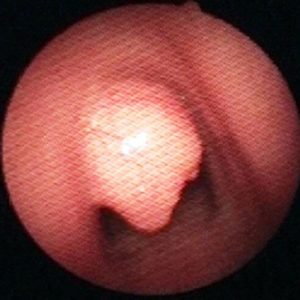
"Warning: the product must not be reused, as this may cause cross-contamination".
Flexible tracheo-carino-bronchial prosthesis to support the tracheal bifurcation and the carinal angle, able to maintain ventilation through one of the main bronchi in very advanced obstructive conditions.
One of its bronchial limbs is completely occluded near its origin. In this way the stent fulfills a special function, allowing ventilation of the healthy lung in patients with a post-surgical bronchopleural fistula or one of other etiologies who require mechanical ventilation.
Thus, the occluded limb of the stent prevents the loss of airflow through the wide communication with the pleural cavity.
The maneuvers required to implant the standard Y-stent are described below, although the use of the special Y-stent insertion forceps is not essential, since this device has only one bronchial limb. Implantation is therefore carried out by introducing the stent into a tracheoscope and then intubating the airway with the assembly. When loading the stent into the endoscope, the bronchial limb must be oriented so that it can occupy the affected main bronchus or stump in the airway.
Once the patient is intubated, advance within the trachea until approaching the carina. The stent is then pushed with a forceps so that it leaves the tracheoscope and lodges in the trachea. The final position can be adjusted with the same forceps so that the single bronchial limb of the stent lodges within the chosen main bronchus.
The procedure is carried out under general anesthesia. Implantation of this type of prosthesis must be performed by experienced personnel. The stent can be mounted on a special forceps for implanting Y-prostheses.
Lubricate the tip of the forceps with lidocaine gel. Introduce the forceps into the stent so that its jaws enter the bronchial limbs of the prosthesis (photograph on the opposite page). Ventilate the patient with oxygen until the highest possible saturation is reached. The patient is then extubated, withdrawing the tracheoscope from the airway. Immediately, and with the aid of a laryngoscope, the forceps carrying the stent is guided into the trachea. When the jaws of the forceps are closed, the bronchial limbs of the stent come together, and in this position it passes between the vocal cords into the trachea. The maneuver continues by advancing the forceps-stent assembly within the trachea until it approaches the carina. When the tip of the forceps-stent assembly is near the tracheal carina, the jaws of the forceps must be opened gently in order to feel the prosthesis reach the tracheal bifurcation.
At this point the jaws are fully opened so that the bronchial limbs of the stent enter the main bronchi. The forceps button is then pressed to hold the stent against the carinal ridge while the forceps is withdrawn, leaving the stent inside the trachea. The entire maneuver must be quick, as it is performed with the patient extubated and in apnea. We recommend using the direct-view optics to ensure that the stent crosses the vocal cords and is not accidentally directed into the esophagus. To this end, the optics must accompany the forceps in parallel during the maneuver, allowing the operator to see and confirm that the stent enters through the glottis. This option is only possible with the aid of a second operator who keeps the intubation laryngoscope in the proper position, while the bronchoscopist uses their dominant hand for the stent-insertion forceps and the other to hold the optics.
Other implantation techniques are possible, such as introducing the folded prosthesis inside a bronchoscope of sufficient caliber and then pushing it along the inside with an alligator forceps or a smaller-diameter bronchoscope once it is close to the tracheal carina.
The implantation maneuver can be completed by adjusting the prosthesis with a forceps.
Intubation is performed with a tracheoscope.
Removal is simpler. The stent should be grasped by its proximal edge with a strong forceps and removed gently by pulling on it, extracting the prosthesis together with the tracheoscope.
The use of this device implies a critical condition of the patient, usually on respiratory support in an intensive care unit. Therefore, care of the stent consists of frequent suctioning and humidified airflow, intended to reduce the production and accumulation of secretions, a measure usually provided in these units.
"Warning: the product must not be reused, as this may cause cross-contamination".
Tracheal stent of simple insertion and removal. Specially designed for the treatment of benign stenosis.
With a diameter of 14 mm, 15 mm or 16 mm at the ends and 12 mm, 13 mm or 14 mm respectively in the central portion, it forms a profile that makes spontaneous displacement after implantation more difficult.
The procedure is carried out under general anesthesia.
This type of prosthesis can be implanted directly through the working channel of the tracheoscope or bronchoscope, or by using a conventional introducer for silicone prostheses.
The airway is accessed with a rigid endoscope.
The length and diameter of the area to be covered by the stent must be properly determined.
A simple method to determine the length of the affected area is to mark the tracheoscope when its tip lies at the end of the lesion, and to mark it again after withdrawing it to the beginning of the lesion. The diameter of the trachea or bronchus should be estimated by comparison with the known diameter of the endoscope used.
Repeat steps 1, 2 and 3 of the retrograde implantation.
Now stop the tracheoscope containing the introducer and the prosthesis 5 mm before the lesion to be treated.
Then slowly press the ejector plunger. In this way the prosthesis will be expelled into the affected trachea.
Some stent-loader models are not introduced inside the tracheoscope but are simply coupled to its proximal end, from where the stent is pushed. To do this, the endoscope will have been stopped proximal or distal to the lesion as explained above, in order to push the prosthesis with the plunger provided with the endoscopic instruments. The stent will thus travel along the entire inside of the tracheoscope until it reaches the trachea. At this point a sudden reduction in the resistance of the pressure applied to the plunger will be felt, indicating that the stent has begun to leave the inside of the endoscope.
The stent may require additional maneuvers to correct or adjust its final position.
It is preferable to correct a stent that has been placed beyond the desired position rather than the opposite, since advancing a prosthesis that has been released "before" the affected zone is highly inconvenient. To move a stent proximally, it can be grasped by its edge and pulled gently. We strongly recommend, for its precision, a maneuver consisting of grasping the stent by its edge as mentioned. Next, advance with the direct-view optics inside the stent until its far end is visualized. Now pull on the forceps and you will see the stent ascend through the airway.
Then stop pulling when you believe the position is optimal.
Intubation is performed with a tracheoscope or rigid bronchoscope as appropriate.
Easy to remove, the silicone stent should be grasped firmly by its edge with an alligator-tooth forceps. Rotate the forceps about 360° so that the stent folds, taking on an omega shape and thus losing its radial resistance to compression. Then pull the forceps, extracting the prosthesis together with the tracheoscope.
The proximal end of the stent can be introduced into the tracheoscope. This maneuver protects the vocal cords during removal.
Other implantation and removal methods are also possible, depending on the operator's experience and preferences.
When an increase in secretions is noticed, perform frequent nebulizations with warm isotonic saline solution.
Treat dental caries and maintain dedicated oral hygiene.
Endoscopic follow-up at the frequency indicated by the physician.
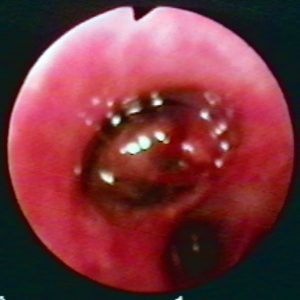
"Warning: the product must not be reused, as this may cause cross-contamination".
It consists of a straight tracheal stent with a thinner wall. This compliance of the stent makes its implantation and removal easier.
It is especially useful after the resection of endotracheal neoplastic tissue, when the condition has no compressive component.
The procedure is carried out under general anesthesia.
This type of prosthesis can be implanted directly through the working channel of the tracheoscope or bronchoscope, or by using a conventional introducer for silicone prostheses.
The airway is accessed with a rigid endoscope.
The length and diameter of the area to be covered by the stent must be properly determined.
A simple method to determine the length of the affected area is to mark the tracheoscope when its tip lies at the end of the lesion, and to mark it again after withdrawing it to the beginning of the lesion. The diameter of the trachea or bronchus should be estimated by comparison with the known diameter of the endoscope used.
Repeat steps 1, 2 and 3 of the retrograde implantation.
Now stop the tracheoscope containing the introducer and the prosthesis 5 mm before the lesion to be treated.
Then slowly press the ejector plunger. In this way the prosthesis will be expelled into the affected trachea.
Some stent-loader models are not introduced inside the tracheoscope but are simply coupled to its proximal end, from where the stent is pushed. To do this, the endoscope will have been stopped proximal or distal to the lesion as explained above, in order to push the prosthesis with the plunger provided with the endoscopic instruments. The stent will thus travel along the entire inside of the tracheoscope until it reaches the trachea. At this point a sudden reduction in the resistance of the pressure applied to the plunger will be felt, indicating that the stent has begun to leave the inside of the endoscope.
The stent may require additional maneuvers to correct or adjust its final position. It is preferable to correct a stent that has been placed beyond the desired position rather than the opposite, since advancing a prosthesis that has been released "before" the affected zone is highly inconvenient. To move a stent proximally, it can be grasped by its edge and pulled gently.
We strongly recommend, for its precision, a maneuver consisting of grasping the stent by its edge as mentioned. Next, advance with the direct-view optics inside the stent until its far end is visualized. Now pull on the forceps and you will see the stent ascend through the airway.
Then stop pulling when you believe the position is optimal.
Intubation is performed with a tracheoscope or rigid bronchoscope as appropriate. Easy to remove, the silicone stent should be grasped firmly by its edge with an alligator-tooth forceps. Rotate the forceps about 360° so that the stent folds, taking on an omega shape and thus losing its radial resistance to compression. Then pull the forceps, extracting the prosthesis together with the tracheoscope. The proximal end of the stent can be introduced into the tracheoscope. This maneuver protects the vocal cords during removal. Other implantation and removal methods are also possible, depending on the operator's experience and preferences.
When an increase in secretions is noticed, perform frequent nebulizations with warm isotonic saline solution.
Treat dental caries and maintain dedicated oral hygiene.
Endoscopic follow-up at the frequency indicated by the physician.
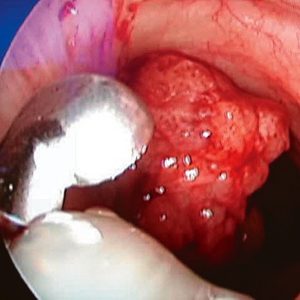
"Warning: the product must not be reused, as this may cause cross-contamination".
With a more robust wall, this model is highly resistant to external compression.
When a High-Pressure Stent is subjected to a force that compresses it with progressively increasing loads, the stent gradually deforms until it reaches the yield point, at which the prosthesis undergoes greater deformation with a marked reduction of its radial resistance to crushing. This breaking point lies around 900 g of load per cm².
In the High-Pressure Stent, the tolerance to compression is raised, exceeding 2000 g per cm².
The increase in wall thickness is accompanied by an unavoidable reduction of the area available for airflow.
The procedure is carried out under general anesthesia.
This type of prosthesis can be implanted directly through the working channel of the tracheoscope or bronchoscope, or by using a conventional introducer for silicone prostheses.
The airway is accessed with a rigid endoscope.
The length and diameter of the area to be covered by the stent must be properly determined.
A simple method to determine the length of the affected area is to mark the tracheoscope when its tip lies at the end of the lesion, and to mark it again after withdrawing it to the beginning of the lesion. The diameter of the trachea or bronchus should be estimated by comparison with the known diameter of the endoscope used.
Repeat steps 1, 2 and 3 of the retrograde implantation. Now stop the tracheoscope containing the introducer and the prosthesis 5 mm before the lesion to be treated.
Then slowly press the ejector plunger. In this way the prosthesis will be expelled into the affected trachea.
Some stent-loader models are not introduced inside the tracheoscope but are simply coupled to its proximal end, from where the stent is pushed. To do this, the endoscope will have been stopped proximal or distal to the lesion as explained above, in order to push the prosthesis with the plunger provided with the endoscopic instruments. The stent will thus travel along the entire inside of the tracheoscope until it reaches the trachea. At this point a sudden reduction in the resistance of the pressure applied to the plunger will be felt, indicating that the stent has begun to leave the inside of the endoscope.
The stent may require additional maneuvers to correct or adjust its final position.
It is preferable to correct a stent that has been placed beyond the desired position rather than the opposite, since advancing a prosthesis that has been released "before" the affected zone is highly inconvenient.
To move a stent proximally, it can be grasped by its edge and pulled gently.
We strongly recommend, for its precision, a maneuver consisting of grasping the stent by its edge as mentioned. Next, advance with the direct-view optics inside the stent until its far end is visualized. Now pull on the forceps and you will see the stent ascend through the airway.
Then stop pulling when you believe the position is optimal.
Intubation is performed with a tracheoscope or rigid bronchoscope as appropriate.
Easy to remove, the silicone stent should be grasped firmly by its edge with an alligator-tooth forceps. Rotate the forceps about 360° so that the stent folds, taking on an omega shape and thus losing its radial resistance to compression. Then pull the forceps, extracting the prosthesis together with the tracheoscope.
The proximal end of the stent can be introduced into the tracheoscope. This maneuver protects the vocal cords during removal.
Other implantation and removal methods are also possible, depending on the operator's experience and preferences.
The special instructions for the use of a high-pressure stent must be observed. Severe tracheal compressive phenomena have various etiologies and may be accompanied by superior vena cava syndrome or other disorders of intrathoracic venous circulation. In these cases, as well as in the presence of mediastinal syndrome, placing a vascular stent prior to the tracheal stent implantation should be considered. The high-pressure stent must be used by expert bronchoscopists.
Although the considerations already described for the implantation of tracheal stents apply, the special instructions for the use of a high-pressure stent must be observed, since the compression tolerance of a high-pressure stent is somewhat more than double that of a classic stent. Therefore, placing the prosthesis in the introducer may be difficult. It is then recommended to apply it directly through the tracheoscope. Except in very firm tracheal compressions, the stent will fully expand within a short time.
The prosthesis should be removed only when the causes of the compressive phenomenon have disappeared.
Proceed according to the removal technique previously described, but be sure to use a strong forceps.
When an increase in secretions is noticed, perform frequent nebulizations with warm isotonic saline solution.
Treat dental caries and maintain dedicated oral hygiene.
Endoscopic follow-up at the frequency indicated by the physician.
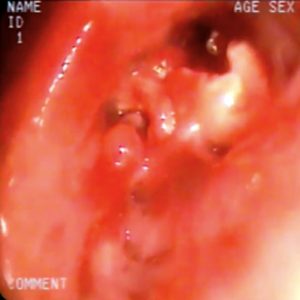
"Warning: the product must not be reused, as this may cause cross-contamination".
At its upper or proximal end, the Subglottic Stent has an 8 mm segment in which the wall thickness is reduced. Along this stretch its normal 1.5 mm wall decreases progressively to zero. This reduction in wall thickness creates a low-resistance area at that end of the stent, intended to occupy the subglottic region, close to the vocal cords. The design facilitates deformation of the stent during laryngeal movements and glottic dynamics in phonation and swallowing. Fixation of the stent in the trachea is provided by the remaining walls of the prosthesis, which have a standard shape and thickness.
The subglottic stent may also be preferred for other locations such as the mid or lower trachea, or even the main bronchi, replacing a classic stent. As will be understood, when this stent is implanted in a main bronchus with its "subglottic" end facing proximally or cephalad, the transition from the bronchial mucosa to the inside of the stent will be very smooth, without the step that accompanies the classic stent. This could help reduce airflow turbulence and the impaction of secretions.
The procedure is carried out under general anesthesia.
This type of prosthesis can be implanted directly through the working channel of the tracheoscope or bronchoscope, or by using a conventional introducer for silicone prostheses.
The airway is accessed with a rigid endoscope.
The length and diameter of the area to be covered by the stent must be properly determined.
A simple method to determine the length of the affected area is to mark the tracheoscope when its tip lies at the end of the lesion, and to mark it again after withdrawing it to the beginning of the lesion. The diameter of the trachea or bronchus should be estimated by comparison with the known diameter of the endoscope used.
Repeat steps 1, 2 and 3 of the retrograde implantation. Now stop the tracheoscope containing the introducer and the prosthesis 5 mm before the lesion to be treated. Then slowly press the ejector plunger. In this way the prosthesis will be expelled into the affected trachea. Some stent-loader models are not introduced inside the tracheoscope but are simply coupled to its proximal end, from where the stent is pushed. To do this, the endoscope will have been stopped proximal or distal to the lesion as explained above, in order to push the prosthesis with the plunger provided with the endoscopic instruments. The stent will thus travel along the entire inside of the tracheoscope until it reaches the trachea. At this point a sudden reduction in the resistance of the pressure applied to the plunger will be felt, indicating that the stent has begun to leave the inside of the endoscope.
The stent may require additional maneuvers to correct or adjust its final position. It is preferable to correct a stent that has been placed beyond the desired position rather than the opposite, since advancing a prosthesis that has been released "before" the affected zone is highly inconvenient. To move a stent proximally, it can be grasped by its edge and pulled gently. We strongly recommend, for its precision, a maneuver consisting of grasping the stent by its edge as mentioned. Next, advance with the direct-view optics inside the stent until its far end is visualized. Now pull on the forceps and you will see the stent ascend through the airway. Then stop pulling when you believe the position is optimal.
Intubation is performed with a tracheoscope or rigid bronchoscope as appropriate. Easy to remove, the silicone stent should be grasped firmly by its edge with an alligator-tooth forceps. Rotate the forceps about 360° so that the stent folds, taking on an omega shape and thus losing its radial resistance to compression. Then pull the forceps, extracting the prosthesis together with the tracheoscope.
The proximal end of the stent can be introduced into the tracheoscope. This maneuver protects the vocal cords during removal.
Other implantation and removal methods are also possible, depending on the operator's experience and preferences.
When loading the stent into the loader, or into the tracheoscope or bronchoscope as the case may be, care must be taken to verify that its thin-walled or "subglottic" end is in a proximal, or cephalad, position. This is the only way that, once released within the airway, it fulfills the functions that make it different. The length and diameter of the stenosis must be properly determined in order to choose a stent of the appropriate dimensions. The final distance between the vocal cords and the stent must be equal to or greater than 2 mm. Bear in mind that distances within the affected trachea are difficult to estimate, since they will change when the patient assumes the standing position. The recovery of muscle tone after the metabolization of the relaxants used during anesthesia adds a further difficulty in determining distances within the airway. Remember that you will additionally face the changes in length that may occur in the trachea after it has been subjected to elongation and traction by the dilation maneuvers with the rigid instruments used. Although some or all of these circumstances may be present in every tracheobronchial recanalization and implantation procedure, they take on crucial importance in conditions of subglottic location, since the precision needed for the stent to lie a few millimeters from the vocal cords will require the bronchoscopist's utmost skill and knowledge.
Care: when an increase in secretions is noticed, perform frequent nebulizations with warm isotonic saline solution. Treat dental caries and maintain dedicated oral hygiene. Endoscopic follow-up at the frequency indicated by the physician.
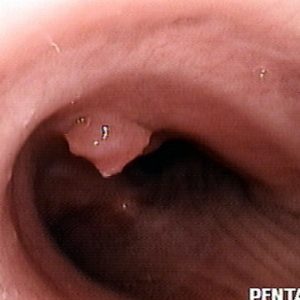
"Warning: the product must not be reused, as this may cause cross-contamination".
Silicone tubes and prostheses for laryngology and tracheostomy: indications, instructions for use and care. Choose an item from the side menu.
The line of tubes for laryngology and tracheostomy comprises a variety of airway prostheses designed to meet different needs, including special situations such as benign stenoses and compressive or occlusive phenomena of various kinds.

Choose a prosthesis that exceeds the affected area by 5 mm to 7 mm in length distally and by the same amount proximally.
Larger-diameter prostheses provide a wide lumen for ventilation, but the incidence of contact granulomas at the ends will also be higher. Granulomas are less common when the ends of the stent remain floating in the airway.
After being ejected, the prosthesis may sometimes not expand completely right away, depending on the degree of extrinsic compression and local edema, but full expansion will be reached spontaneously within 24 to 72 hours.
Although silicone prostheses are highly resistant to the action of the laser and the electrocautery snare, their direct action on the prosthesis must be avoided. It must be kept protected from daylight or fluorescent lighting to preserve its translucent appearance.
Patients with tracheal prostheses must not undergo routine pre-anesthetic orotracheal intubation, and the specialist must be consulted whenever orotracheal intubation is deemed essential.
The patient must be given a document explaining their situation.
Reuse of this type of device is not recommended.
If necessary, saline nebulizations may be prescribed several times a day, reducing their frequency as the risk of secretion encrustation decreases.
The Tracheal "T"-Tube helps maintain an adequate caliber in the airway. It can act as a support for the tracheal wall in the treatment of stenosis.
The external limb of the tracheal "T"-tubes prevents displacement and allows the aspiration of bronchial secretions.
When cleaning it, both internal limbs must be suctioned. A thin catheter connected to the suction system can be used. To guide the catheter upward or downward inside the Tracheal "T"-tube, the external limb can be tilted in the direction opposite to the one to be suctioned.
Suctioning can also be performed with the aid of a flexible bronchoscope. Once suctioning is finished, the external limb must remain permanently closed with the cap provided for that purpose.
In this way it will be possible to inhale air with the humidity and temperature resulting from its passage through the upper airway.
The Long Tracheal "T"-Tube has a longer distal limb. This variant makes it possible to treat conditions located in the intrathoracic portion of the trachea.
The procedure is usually performed in the same operating room and during the general anesthesia arranged for the tracheal repair, but it can also be performed under local anesthesia.
Two curved forceps and a suction system will be required. The lower limb of the "T"-tube must be folded at its end (fig. 1) to facilitate its introduction through the tracheal stoma.
The curved forceps will hold the tube in the folded position (fig. 2). The assembly is then introduced into the trachea through the tracheostomy opening (fig. 3).
The second forceps will secure the "T"-tube by its external limb, thus preventing unwanted displacement (fig. 4). Move the "T"-tube until its upper limb enters the trachea and lodges inside it, occupying the tracheal portion adjacent to the vocal cords (fig. 5). Finally, the ring with the cap must be applied to the external limb of the "T"-tube. To do this, the ring can be threaded onto the forceps, the external limb of the "T"-tube grasped with it, and the ring slid until it is close to the skin of the neck, interposing a gauze pad between the skin and the ring. Occlude the external limb with the cap provided.
A very clever and useful resource consists of using a tape about 80 cm long, which can be improvised with a narrow bandage. It must be introduced through the end of the external limb of the "T"-tube and guided along the inside so that it exits through the upper tracheal limb of the tube. This end of the bandage must then be grasped and, with the aid of a forceps, introduced through the tracheostoma until it reaches the inside of the trachea. A second long forceps is introduced inside the bronchoscope until it reaches and grasps the end of the tape left inside the trachea and, by pulling on it, the tape will then travel along the inside of the bronchoscope or tracheoscope until it appears at its proximal end. We now have a thin tape entering through the external limb of the "T"-tube and exiting through our bronchoscope.
As always happens, the lower limb of the "T"-tube lodges easily in the distal trachea, but the upper limb may remain folded or have difficulty ascending the trachea toward the glottis. By now tensioning the tape we have placed, grasping it by its ends, the limbs of the "T"-tube will align easily, inevitably following the direction the tape occupies and positioning the tube securely. Additionally, the tape method prevents any accidental displacement of the "T"-tube during the implantation maneuver.
The tracheal "T"-tube can be removed easily by grasping it by its external limb and pulling. This traction causes its internal limbs to fold and come together, thus leaving the trachea through the stoma, following the direction of the force pulling it from the outside. Removal can be performed because the treatment period has been completed or in order to exchange the "T"-tube.
The more delicate removal can also be carried out using a straight laryngoscope or a tracheoscope which, introduced into the airway, allows the end of the "T"-tube to be visualized. Grasp the "T"-tube through the tracheoscope while an assistant cuts the external limb of the tube with scissors at the point closest to the trachea. The "T"-tube is then extracted with the forceps through the channel of the tracheoscope.
Other forms of insertion and removal are possible depending on the operator's experience and preferences.
Anesthesia through the Tracheal "T"-tube is possible. The upper limb must be occluded to prevent the loss of anesthetic gases. This can be achieved by inflating the balloon of a catheter which, introduced nasally, must cross the vocal cords and lodge inside the upper limb of the Tracheal "T"-tube. Since the Tracheal "T"-tube has no inflatable balloon, positive-pressure ventilation may cause a variable loss of the air volume delivered, depending on the greater or lesser space between the tube wall and the trachea.
Keep the external limb permanently occluded with the cap provided. If stridor, labored breathing or any other abnormality appears, remove the external cap and consult the specialist immediately.
"The product must not be reused, as this may cause cross-contamination".
Pharyngeal tubes are made of flexible silicone and are useful in a variety of situations.
Its apical end widens progressively; in this way the anterior edge keeps contact with the base of the tongue, while the posterior edge rests on the pharyngeal wall.
It thus collects saliva in the oropharynx, channeling it to the esophagus, preventing tissue maceration and avoiding the aspiration of saliva into the airway.
A nasoenteral feeding tube can be introduced through the Pharyngeal Tube.
The Pharyngeal Tube must be introduced under general anesthesia. It can be cut to the length deemed appropriate for the case.
A laryngoscope will be used to have comfortable access to the larynx and adequate vision.
With the aid of a hypopharyngoscope and a long forceps, grasp the tube by its distal end to guide it toward the esophagus until the proximal cup lies at the laryngeal level.
Prior esophageal dilation may be necessary. After its introduction, it can be fixed with a percutaneous stitch.
Periodic medical check-ups.
"Warning: the product must not be reused, as this may cause cross-contamination".
Get in touch for personalized technical advice on the use of Stening® devices in the airway.